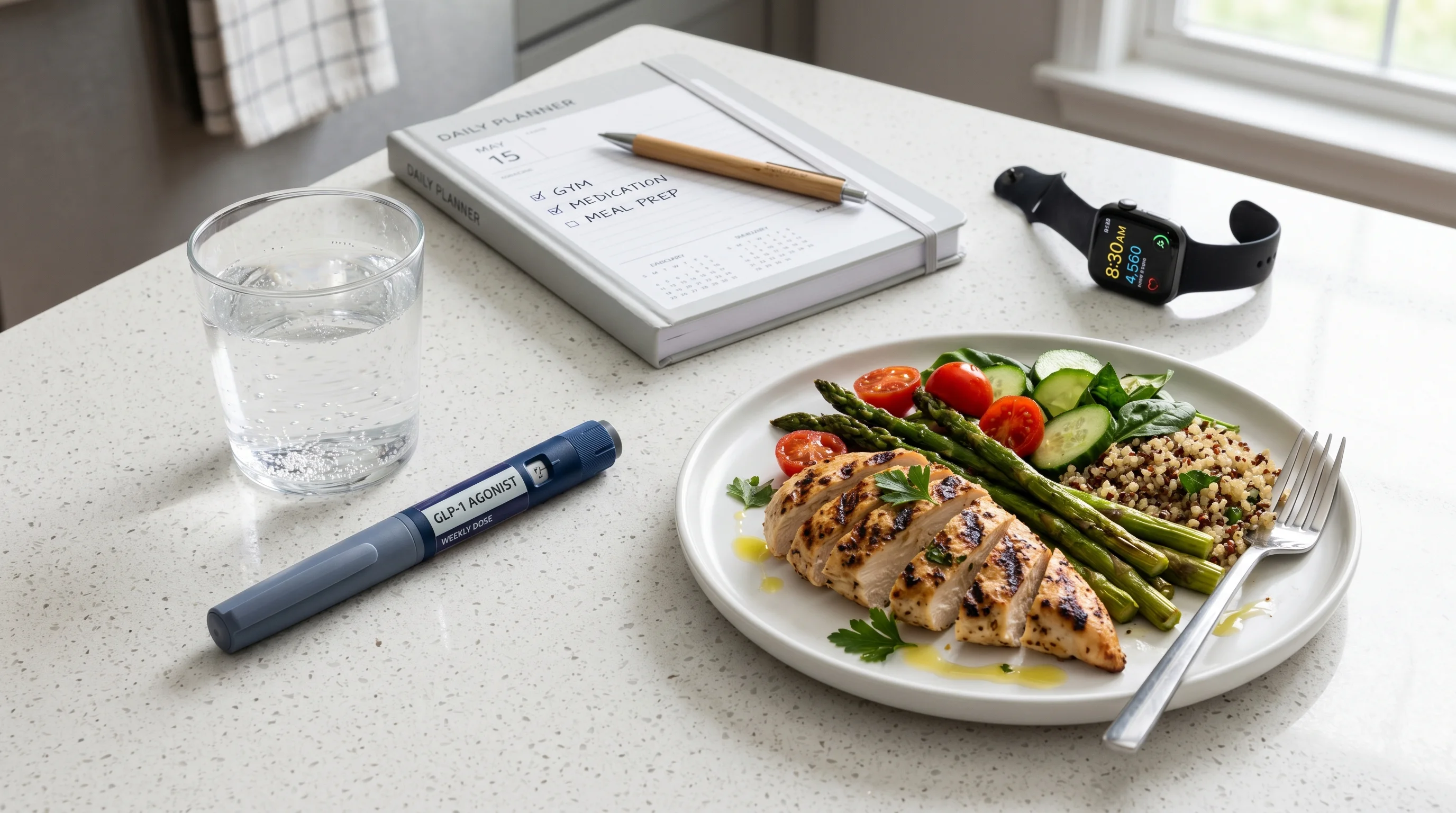
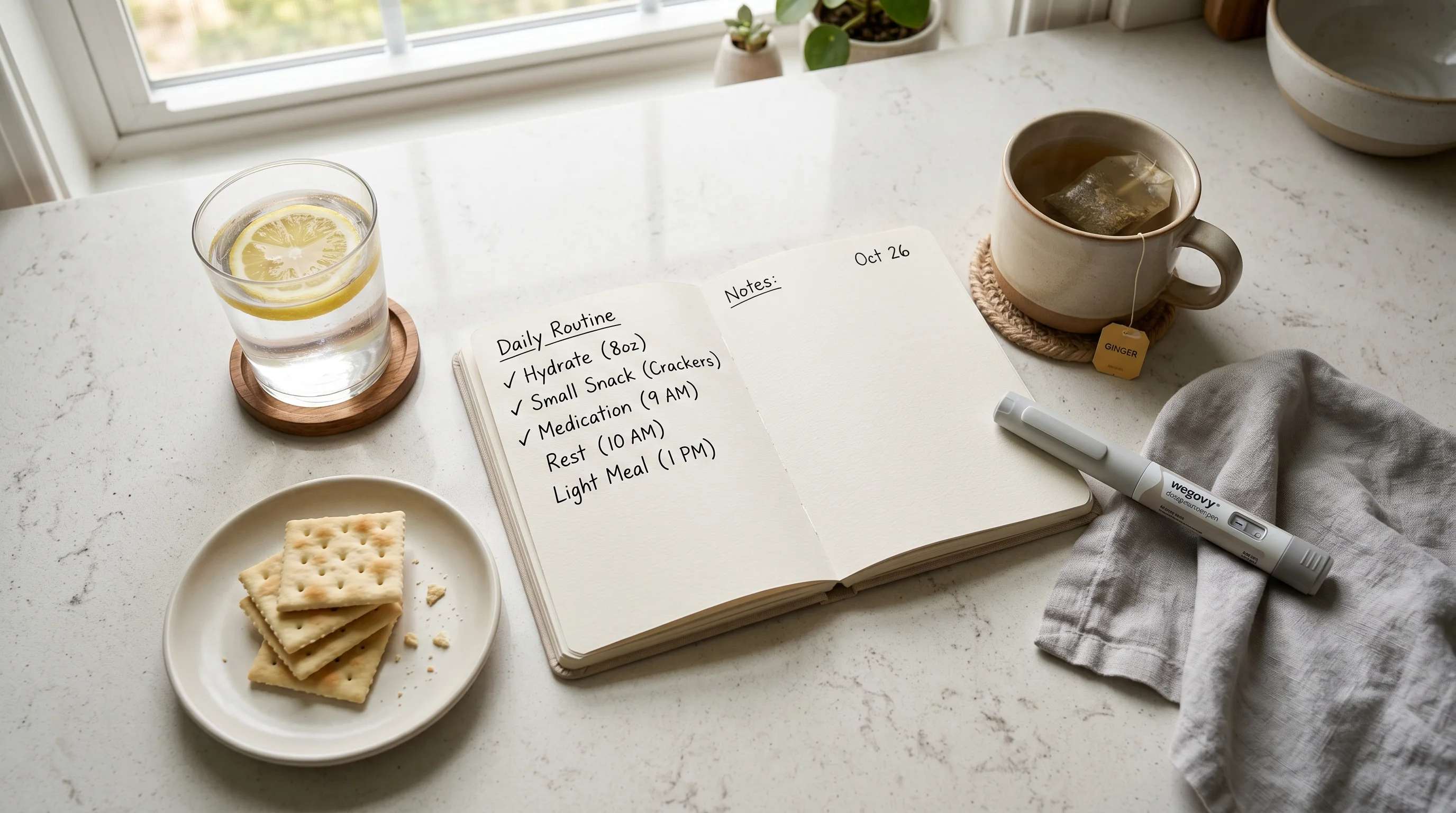
Most side effects from GLP-1 medications show up early and are usually mild. For many people, the hardest stretch happens during the first four weeks or after a dose increase 5.
Tracking how you feel each day can help you catch patterns before they turn into bigger problems. If you want to spot those patterns early, check out our guide on GLP-1 side effect tracking. A few notes each day can show you how your body responds week by week.
What Is Happening in Your Body
GLP-1 medications slow down how fast your stomach empties. That can help you feel full longer, but it can also make your digestion feel strange at first.
The most common side effects are stomach and gut issues like nausea, diarrhea, vomiting, constipation, stomach pain, bloating, burping and reflux 4. You may feel queasy, backed up or just off while your body adjusts. These symptoms are often worse when you start or when your dose goes up 5.
What You May Feel by Week
Week 1: Getting Used to It
The first week is often when nausea shows up.
You may feel full faster than usual. You may eat a meal that used to feel normal and suddenly feel like it was too much. I remember my first week on Zepbound. I had to sip ginger tea often just to keep my stomach calm.
This is a good week to eat smaller meals, slow down and avoid greasy foods if they bother you.
If that first wave of nausea is already hitting hard, our guide on GLP-1 side effect management gives practical ways to feel better.
Week 2: Finding a Pattern
By the second week, nausea may start to fade. Then constipation can show up.
Since food is moving more slowly, your bathroom routine may change too. Water, fiber and light movement matter more than people think here. Many people feel better once the first rough wave passes, but they still need to stay ahead of hydration and digestion.
Do not wait until you feel backed up for several days. Track it early.
Weeks 3 and 4: Dose Changes Can Bring Symptoms Back
Weeks three and four can be tricky.
If your dose increases, some week one symptoms may return. Nausea, constipation, diarrhea or low appetite can come back even if you were starting to feel better.
Dehydration from vomiting or diarrhea can raise the risk of kidney problems 3. Keep sipping fluids, especially if eating feels hard. If you cannot keep fluids down, feel dizzy or have symptoms that keep getting worse, contact your clinician.
What Helps Most
Go slow. There is no award for rushing to the highest dose.
I have seen people try to speed things up, then end up feeling awful and needing to pause. That is a bad trade.
Stay ahead of water. Do not wait until you are thirsty. Keep a bottle near you and take small sips during the day.
Pay attention to hunger, but do not ignore food completely. Low appetite does not mean your body needs nothing. Focus on foods that help you get protein, fluids and enough energy to function.
Food, Weight Loss and Safety
Rapid weight loss can feel exciting, but it can also come with risks.
Rapid weight loss may raise the risk of gallstones, and gallstones can play a role in pancreatitis risk. A Cleveland Clinic Journal of Medicine review also discusses how GLP-1 treatment, rapid weight loss, biliary changes and pancreatitis concerns can overlap 1.
Pancreatitis is not something to brush off. Severe belly pain, pain that moves to your back, vomiting or symptoms that feel intense and unusual need medical attention.
Food is not the enemy here. Your body still needs fuel while the medication does its job.
The Mental Side
Starting a GLP-1 medication can mess with your head a little.
Not thinking about food all day can feel freeing. It can also feel weird. You may feel excited one day and anxious the next because your appetite, habits and body are all changing at once.
On January 13, 2026, the FDA requested removal of suicidal behavior and ideation warning language from GLP-1 RA medication labels after its review did not find an increased risk with these medicines 2.
Still, your mental health matters. If your mood changes in a way that scares you, or if you have thoughts of self-harm, get help right away.
Tracking progress should go beyond the scale. To keep a wider view of your health, read our guide on what to track on your GLP-1 journey.
Start Tracking With GLP-1 Assist
GLP-1 Assist helps you track your dose routine, side effects, meals, hydration, progress, workouts and patterns in one place.
That makes the first few weeks easier to understand. You can see what changed, when it changed and what helped.
Start your free 7-day trial today: Try GLP-1 Assist free for 7 days.
Related Reading
- GLP-1 Side Effects Tracking: How to Feel Better Faster
- GLP-1 Side Effect Management: A Coach’s Guide to Feeling Better
- What to Track on Your GLP-1 Journey
About the Author Paul Brown is a Certified Personal Trainer and the creator of GLP-1 Assist. After starting his own GLP-1 journey, Paul quickly realized that standard fitness advice doesn't apply when you are battling zero appetite and medication side effects. He built GLP-1 Assist as a private, secure way for users to track their doses, manage symptoms, and prioritize nutrition without their health data being sold.
Disclaimer: Paul is a fitness professional, not a doctor. The content on this blog is based on lived experience and fitness expertise, and is not intended as medical advice. Always consult your physician regarding your medication.