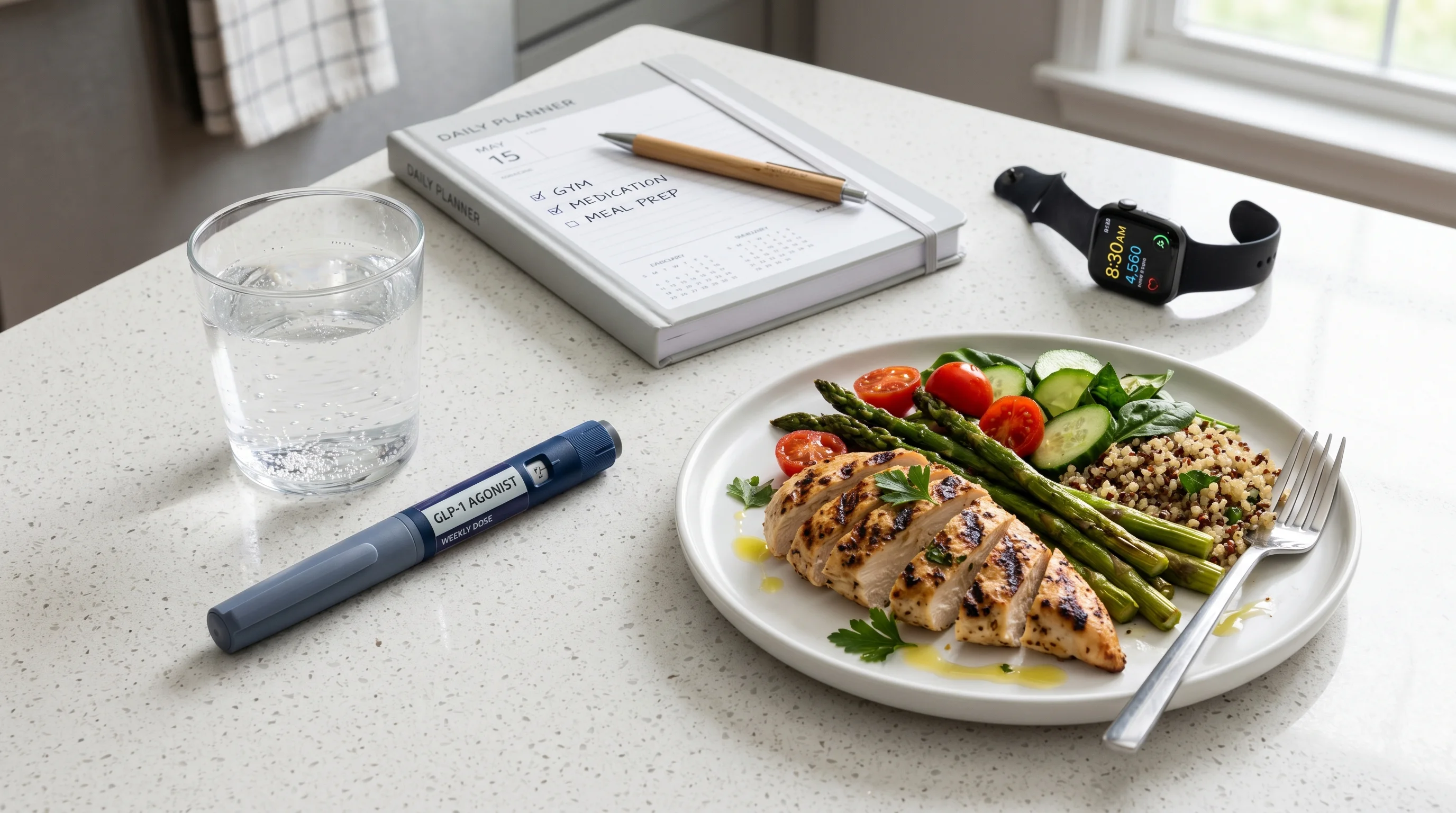
A GLP-1 daily routine works best when it is small enough to repeat on a bad day.
That is the whole point.
The medication can lower appetite and quiet food chatter, which gives you a real opening to change old patterns. It can also slow digestion, which means certain foods and meal patterns may cause more GI discomfort than they used to. 12
So the routine does not need to be fancy. It needs to keep you steady.
Know The Job Of The Routine
Your daily routine has five jobs:
- get protein in before the day gets away from you
- drink enough fluid
- move a little, even on low-energy days
- track symptoms before they become a mystery
- keep evenings calm enough that tomorrow is easier
That is it.
You are not trying to build a perfect wellness schedule. You are trying to make fewer decisions while your appetite, digestion and energy are changing.
If tracking already feels scattered, start with a simple symptom check-in. The goal is to notice patterns early, especially around nausea, constipation, fatigue, reflux and injection timing. Our guide to a GLP-1 daily symptom check-in walks through what to log without turning it into homework.
Morning: Get Ahead Of The Day
Do not wait for hunger to tell you what to do.
On GLP-1s, hunger can be quiet for hours. That sounds helpful until you hit noon with no food, not much water and a stomach that suddenly wants to negotiate.
Start with water and something small that has protein. It does not have to be a huge breakfast. It can be eggs, Greek yogurt, cottage cheese, a protein shake or leftovers if that is what works.
Cleveland Clinic recommends nutrient-dense foods on GLP-1s, including lean protein, fruits, vegetables and whole grains. Protein also helps reduce the risk of losing muscle instead of fat, and fiber can help with constipation. 2
If mornings are rough, make the bar lower:
- water first
- a few bites of protein
- medication and supplement check
- one sentence about how you feel
That is enough to start.
Midday: Eat Before You Are Running On Empty
The middle of the day is where a lot of GLP-1 routines fall apart.
You feel fine, so you skip food. Then you get shaky, tired or queasy. Then dinner becomes too much because you are trying to make up for the whole day.
Mayo Clinic Diet recommends smaller, more frequent meals for nausea or low appetite, along with eating slowly and avoiding skipped meals. 3
For lunch, think small and boring in the best way:
- chicken and rice
- tuna and crackers
- soup with beans or chicken
- turkey roll-ups
- Greek yogurt with fruit
- tofu, rice and cooked vegetables
If nausea is already showing up, do not force a heroic meal. Go bland, go slow and use the plan from A GLP-1 Nausea Day Plan That Actually Helps.
The win is not a perfect lunch. The win is keeping your body from running on fumes.
Afternoon: Move Without Making It A Production
You need movement in the routine, but it does not have to be dramatic.
The CDC recommends 150 minutes of moderate activity each week and at least 2 days of muscle-strengthening activity. The CDC also notes that activity can be spread across the week and broken into smaller chunks. 4
That gives you options.
A low-energy day might be a 10-minute walk after lunch. A better day might be a strength session. If you are ready for a real plan, use the GLP-1 Strength Training Reset Plan and start with structure instead of guessing.
Movement also helps with constipation. Mayo Clinic Diet lists daily exercise as one way to reduce constipation from weight-loss medications. 3
Keep the afternoon simple:
- walk after one meal
- lift 2 to 3 days per week
- stretch if you feel stiff
- stop before you turn a useful habit into punishment
The best workout is the one you can repeat next week.
Evening: Keep Dinner Calm
Dinner is where delayed digestion can make itself known.
High-fat foods, fried foods and spicy foods can make symptoms worse for some people on GLP-1s. Mayo Clinic Diet also recommends smaller meals when reflux or GI symptoms are a problem. 23
That does not mean dinner has to be joyless.
It means you may feel better with a smaller plate, slower eating and food that is easier on your stomach. Try protein, a cooked vegetable and a simple carb. Think salmon, rice and zucchini. Or chicken, potatoes and carrots. Or tofu, noodles and broth.
If reflux is part of your pattern, Mayo Clinic Diet recommends smaller meals, eating more slowly and not lying down after a meal. 3
Before bed, set up the next morning:
- fill your water bottle
- put breakfast protein where you can see it
- check tomorrow's schedule
- log symptoms while you still remember them
Small setup beats morning chaos.
Weekly: Review What Your Body Is Telling You
Pick one day a week to review the basics.
Do not make it a dramatic meeting with yourself. Ten minutes is plenty.
Look at:
- nausea days
- constipation days
- protein misses
- skipped water
- movement
- sleep
- injection day symptoms
- weight trend
Patterns matter more than one weird day.
If every dose increase brings two rough mornings, plan bland breakfast and lighter meals ahead of time. If constipation keeps showing up after low-water days, that is useful. If you feel weaker after a week of low protein, do not ignore it.
For a wider tracking list, use What to Track on Your GLP-1 Journey. For protein specifically, read GLP-1 Protein Goals: Stop Muscle Loss Before It Starts.
When To Call Your Clinician
Most side effects are mild and improve as your body adjusts, but some symptoms need help.
Contact your clinician if symptoms are severe, last for several days or make it hard to drink fluids or eat food. Mayo Clinic Diet also says to reach out for severe nausea or vomiting, severe stomach pain, severe dizziness, shakiness, sweating or signs of an allergic reaction. 3
Do not try to routine your way through a true medical problem.
Your routine is for normal days and mildly rough days. It is not a substitute for medical care.
Use GLP-1 Assist To Keep It Simple
GLP-1 Assist helps you keep the routine in one place: symptoms, meals, protein, hydration, movement, dose timing and notes you can actually use later.
Start small. Track the next few days. Look for the pattern.
Start your free 7-day GLP-1 Assist trial and build a daily routine that makes the medication easier to live with.
Related Reading
- GLP-1 Daily Symptom Check-In: Why Tracking Changes Everything
- GLP-1 Protein Goals: Stop Muscle Loss Before It Starts
- A Strength Training Reset Plan for GLP-1s: Keep the Muscle, Lose the Fat
About the Author Paul Brown is a Certified Personal Trainer and the creator of GLP-1 Assist. After starting his own GLP-1 journey, Paul quickly realized that standard fitness advice doesn't apply when you are battling zero appetite and medication side effects. He built GLP-1 Assist as a private, secure way for users to track their doses, manage symptoms, and prioritize nutrition without their health data being sold.
Disclaimer: Paul is a fitness professional, not a doctor. The content on this blog is based on lived experience and fitness expertise, and is not intended as medical advice. Always consult your physician regarding your medication.