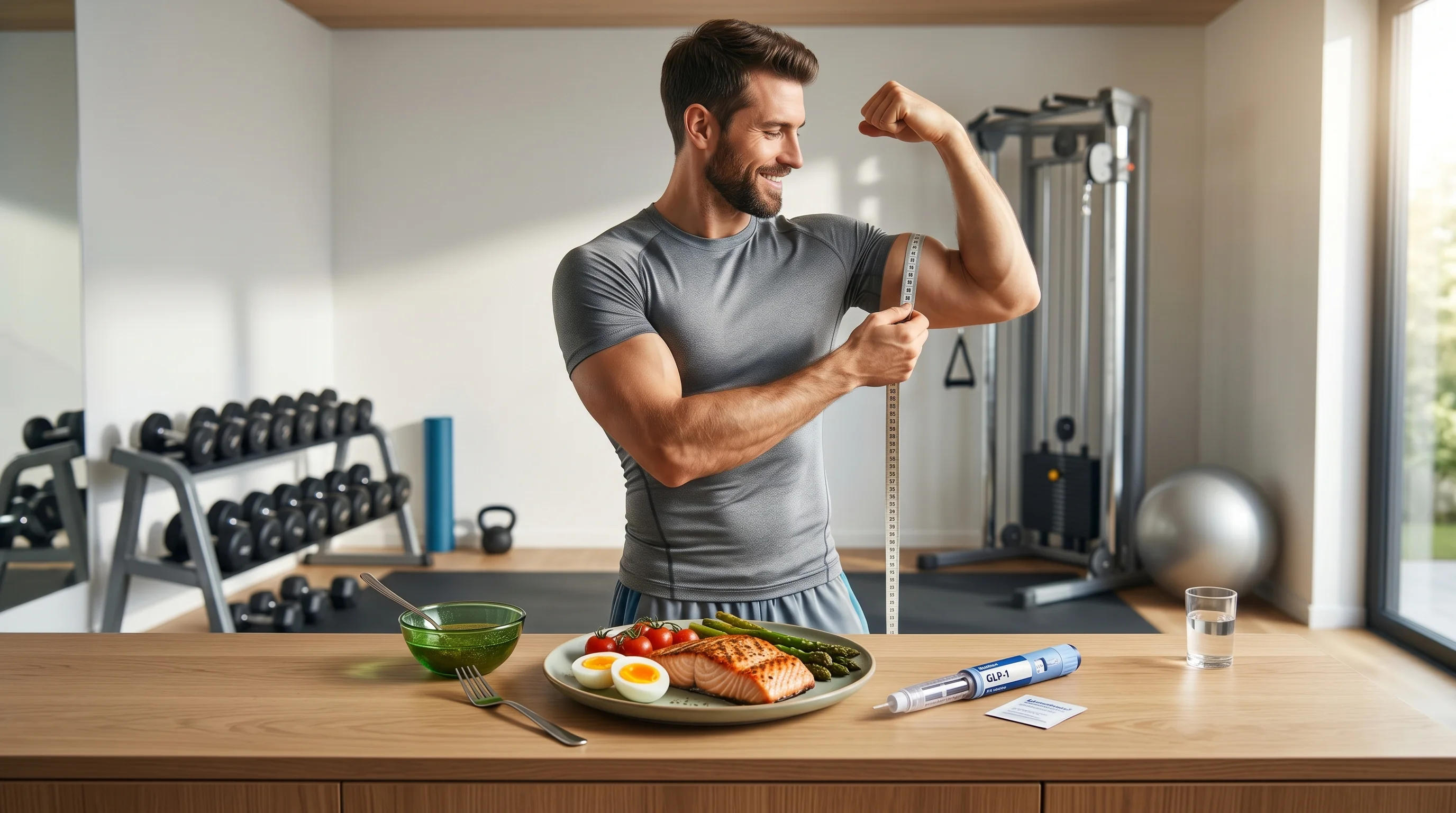
GLP-1 protein goals matter because eating enough protein can get harder once your appetite drops. Researchers identify low protein intake as a nutrition concern for people taking GLP-1 and dual GIP/GLP-1 medications because low food intake and poor diet quality may affect muscle mass, strength and function 1.
That does not mean protein fixes everything. It means protein needs your attention early, before the scale is down but your energy and strength are down too.
The goal is not just to weigh less. The goal is to lose fat while keeping as much strength, muscle and daily function as you can. If you need help setting your starting target, read GLP-1 Protein Goals: How to Save Muscle While You Shrink so you can compare what you eat now against what your body may need.
Why Food Matters So Much
GLP-1 medications can make food feel easy to ignore.
You may feel full after a few bites. You may skip meals without meaning to. You may look at dinner and feel like your stomach already made the decision for you.
That can help with weight loss, but it can also make nutrition harder.
Researchers note that low food intake and poor diet quality may add to muscle loss in people taking GLP-1 or dual GIP/GLP-1 medications 1. That is the part people miss when they only focus on the scale.
If you eat less overall, each meal has to do more work. A small meal still needs protein. A snack still needs a purpose. Your body does not stop needing nutrients just because hunger gets quiet.
Weight Loss Can Include Muscle
When you eat less, weight can come down quickly.
Some of that weight may be fat. Some may be water. Some can also be lean mass, which includes muscle and other tissue that is not body fat.
Mass General notes that weight loss can include lean body mass loss, and that exercise plus a high-protein diet may help protect bone and muscle mass during GLP-1 treatment 3.
That is the safer way to say it.
Muscle loss is not a personal failure. It is a risk that can come with weight loss, especially when food intake drops and training falls off. The fix is not panic. The fix is having a plan before the problem gets loud.
Lean Mass Is Not Just a Gym Thing
Lean mass is not just a word for bodybuilders.
It affects how strong you feel, how well you move, how you recover and how your body looks as fat comes down. Losing too much lean mass can make you feel smaller but not stronger. Nobody is signing up for that version.
A review on GLP-1 medications and muscle health notes that lean mass can change during treatment, while muscle function may not always worsen in the same way 4.
That is a careful claim, and it matters.
GLP-1 medications do not automatically ruin your muscle. But fast weight loss without enough protein and strength training can leave you feeling weaker than you expected.
So do not wait until your workouts feel terrible to care about muscle. Start now.
Set Your Protein Goal Early
You cannot hit a target you never set.
Before you build a meal plan, figure out what protein goal makes sense for you. That number may depend on your body size, age, training, medical history and how fast you are losing weight.
A clinician or registered dietitian can help you personalize it. But you still need a working number, because “I should eat more protein” is too vague to be useful.
Once you have the number, break it into smaller parts. Trying to eat most of your protein at dinner is a rough plan on a GLP-1. Dinner may be the meal where your appetite is lowest.
A better plan is to spread protein across the day. Breakfast counts. Lunch counts. Snacks count. Smaller meals can still add up.
For more help with the math, read Hitting Your GLP-1 Protein Goals to Stop Muscle Loss.
Eat Protein First
The simplest habit is still protein first.
Eat the eggs before the toast. Eat the chicken before the rice. Eat the Greek yogurt before the fruit. Eat the tofu, fish, beans, cottage cheese or turkey before you get distracted by the easier stuff.
This works because GLP-1 medications can make fullness hit fast. If you start with lower-protein foods, you may run out of appetite before you get to the food your body needs most.
This does not mean carbs are bad. It does not mean vegetables do not matter. It means the order matters when appetite is limited.
Think of each meal as a short window. You may only have a few bites before your body says it is done. Make the first bites count.
Soft Protein Still Counts
Some days, chewing meat is not happening.
Nausea, texture changes and long fullness can make dense foods feel awful. Dry chicken breast can go from “healthy choice” to “nope” pretty fast.
That is when soft protein helps.
Greek yogurt, cottage cheese, scrambled eggs, tuna salad, egg salad, tofu, beans, lentil soup, shredded chicken soup, protein smoothies and shakes can all be easier than a big plate of meat.
A joint advisory on GLP-1 nutrition says care during treatment should include managing stomach side effects, changing food preferences, nutrient risks, muscle and bone preservation through resistance training and the right diet 2.
That supports a flexible plan. If solid food is hard, do not turn the day into a protein disaster. Use foods your stomach can handle.
A shake is not a moral failure. It is a tool.
Low Appetite Can Trick You
Low appetite can feel helpful until it quietly creates a problem.
You may think, “I am not hungry, so I must be fine.” Maybe you are. Maybe you are also under-eating for several days in a row.
That is the tricky part.
On a GLP-1, hunger is not always a reliable reminder. You may need structure even when food does not sound good.
Set a loose schedule. Build a few protein routines. Keep easy options around. Do not save all your eating for later, because later may show up with zero appetite.
This is where planning beats motivation. Motivation is cute. A stocked fridge is better.
Watch Your Energy and Strength
The scale may be moving, but your body can still send warning signs.
Workouts may start feeling harder. Recovery may slow down. Stairs may feel heavier. You may feel flat or tired in a way that does not match your day.
There can be many reasons for that, but low total food intake, low protein, dehydration, poor sleep and side effects are all worth checking.
The same review says monitoring can include body composition, physical function and possible signs of poor nutrition, including fatigue 1.
So do not ignore the wall when you hit it.
Look at the basics first. How much protein did you actually eat this week? How much water? Did you train? Did side effects make meals harder? Did you sleep?
That is useful information. Guessing is not.
Do Not Let the Scale Run Everything
The scale is one data point.
It is not the boss.
If the number is dropping but your strength is dropping too, pay attention. If your clothes fit better but you feel weak, pay attention. If your appetite is gone and you are barely eating, pay attention.
A good GLP-1 plan should protect more than weight loss. It should support strength, energy, digestion, workouts and daily life.
Track protein. Track workouts. Track how your body feels after dose day. Track which foods sit well. Track whether you are getting weaker or stronger.
That gives you a fuller picture.
The goal is not to chase a smaller body at any cost. The goal is to build a healthier one.
Strength Training Helps Protect Muscle
Protein helps give your body materials.
Strength training tells your body to keep using those materials.
That is why lifting matters. Resistance training, machines, dumbbells, bands and bodyweight exercises can all help if they challenge your muscles safely.
The joint advisory recommends preserving muscle and bone mass through resistance training and the right diet during GLP-1 treatment 2. Mass General also notes that combining GLP-1 treatment with exercise and a high-protein diet has shown benefit for preserving bone and muscle mass 3.
That combination matters.
Protein without training is incomplete. Training without enough protein is also a rough setup. Put them together and you give your body a better reason to keep muscle while weight changes.
You do not need to train like an athlete. You need to start with safe, repeatable work and build from there.
If you need a place to begin, read Strength Training Basics for GLP-1 Users: Keep the Muscle.
Build a Plan You Can Repeat
A good GLP-1 protein plan should work on a normal weekday.
If it only works when your fridge is perfect, your schedule is open and your stomach feels amazing, it is not much of a plan.
Start with one protein option for breakfast. Pick something easy: Greek yogurt, eggs, cottage cheese, tofu or a shake.
Pick one lunch you can repeat without thinking too hard. Chicken, beans, tuna, leftovers or a protein bowl can work.
Dinner can be flexible. If appetite is lower at night, keep it smaller but still protein-focused.
Then add backup foods. Keep soft protein around. Keep a shake you tolerate. Keep soup, yogurt or cottage cheese available for rough days.
The goal is not to create a perfect diet. The goal is to remove as many decisions as possible so you do not have to negotiate with yourself every time you eat.
For a bigger eating strategy, read GLP-1 Protein & Nutrition Strategies: Save Your Muscle While You Lose.
Stop the Problem Early
The worst time to care about muscle is after you already feel weak.
Start early. Set your protein goal. Eat protein first. Keep soft options ready. Lift weights. Watch your energy. Track the habits that show whether your body is getting what it needs.
This does not need to be dramatic.
Most of the work is boring. That is fine. Boring habits are usually the ones that hold up.
Protein will not solve everything by itself. But it is one of the first things to get right if you want the weight loss to feel better, look better and support the life you are trying to build.
Start Tracking With GLP-1 Assist
GLP-1 Assist keeps your dose routine, protein, meals, hydration, workouts, side effects and progress in one place.
That matters when you are trying to protect muscle. You can see whether low appetite is causing low-protein days, whether dose day affects your workouts and which meals are easiest to handle when your stomach feels picky.
Instead of guessing, you get a clearer picture of what helps you stay consistent while the weight comes down.
Start your free 7-day trial today: Try GLP-1 Assist free for 7 days.
Related Reading
- GLP-1 Protein Goals: How to Save Muscle While You Shrink
- Hitting Your GLP-1 Protein Goals to Stop Muscle Loss
- GLP-1 Protein & Nutrition Strategies: Save Your Muscle While You Lose
About the Author Paul Brown is a Certified Personal Trainer and the creator of GLP-1 Assist. After starting his own GLP-1 journey, Paul quickly realized that standard fitness advice doesn't apply when you are battling zero appetite and medication side effects. He built GLP-1 Assist as a private, secure way for users to track their doses, manage symptoms, and prioritize nutrition without their health data being sold.
Disclaimer: Paul is a fitness professional, not a doctor. The content on this blog is based on lived experience and fitness expertise, and is not intended as medical advice. Always consult your physician regarding your medication.