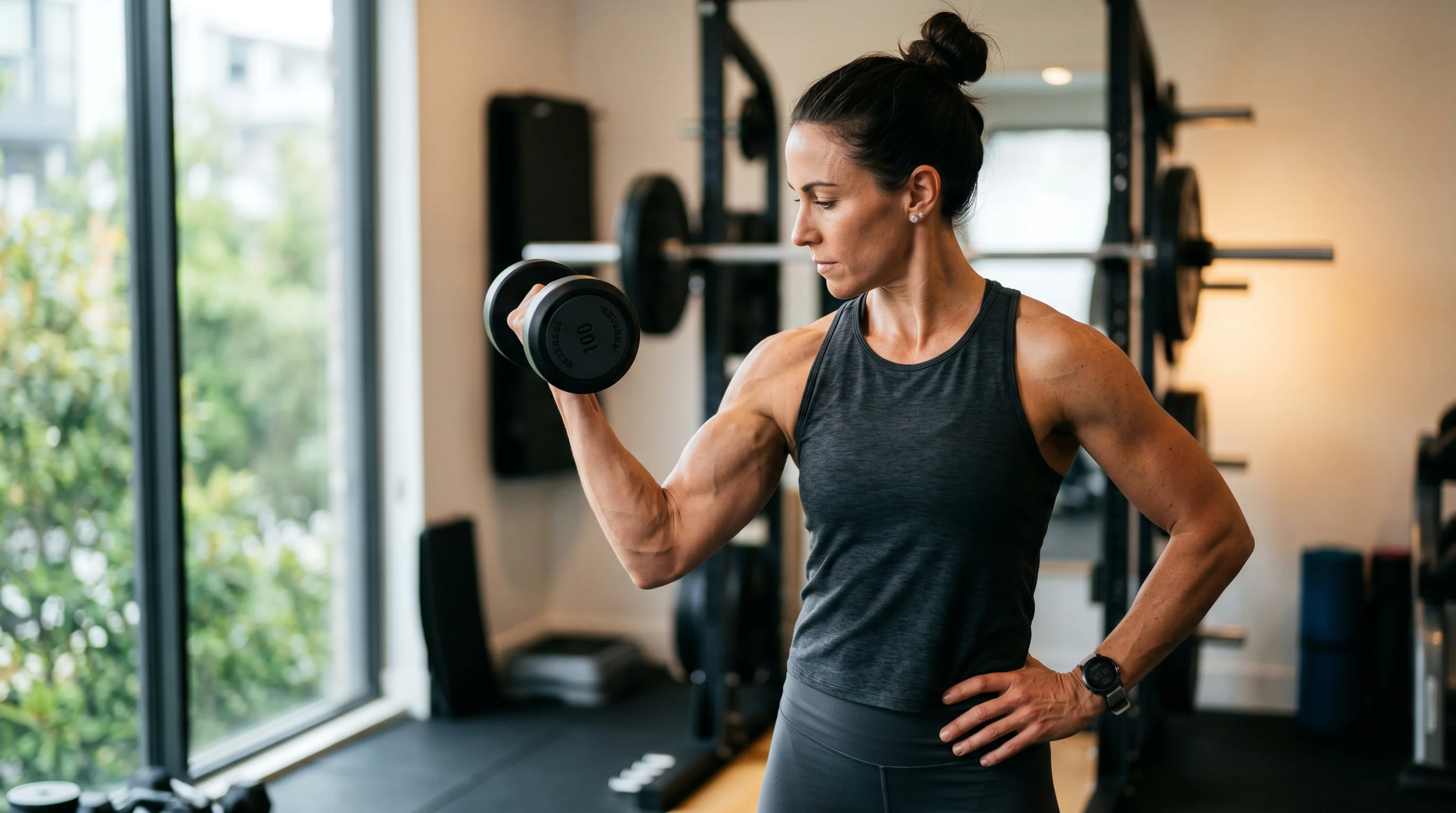
Strength training isn't just about getting big muscles. It's the single best way to make sure the weight you lose is actually fat, not the muscle your body needs to stay strong. If you're on a GLP-1, lifting weights isn't optional.
What's Actually at Stake
Here's the part that surprises most people. Without the right lifestyle changes, up to 40% of the weight you lose could be lean muscle tissue. 1 That's not a rounding error. That's nearly half your results going in the wrong direction.
Muscle keeps your metabolism running. Lose too much of it and your body burns fewer calories at rest, your strength drops, and keeping the weight off long-term gets a lot harder. Resistance training is the most effective way to stop this from happening. 3
When I first started my own GLP-1 journey, I was shocked by how fast the scale moved. It felt like a win. But as a personal trainer, I knew the scale doesn't tell you what you're actually losing. I had to fight for every ounce of muscle. Combining your medication with structured exercise helps preserve lean mass and keeps the weight off over time. 2 The two work together in a way that neither does alone.
You Don't Need a Fancy Gym
A lot of people put off strength training because they picture expensive memberships or complicated equipment. You don't need any of that to start.
Bodyweight exercises like squats, pushups, lunges, and hip hinges are genuinely effective. The goal isn't to look impressive in a gym. The goal is to give your muscles a reason to stick around.
Aim for two to three sessions a week. That's it to start. Clinical guidelines actually back this up, recommending resistance training specifically to protect lean mass while on GLP-1 treatment. 4 Consistency is what matters, not intensity. A 20-minute session three times a week beats an hour-long session once a week every time.
How to Track Real Progress
The scale is a liar. It doesn't tell you whether you're losing fat or muscle. A number going down feels like progress, but it's just a number.
If you want to measure what's actually happening, you need more than your morning weigh-in. Track how your clothes fit, how strong you feel, and how your performance changes week to week. Can you do more reps than last month? Are you lifting heavier? Those are the signals that matter.
For a deeper look at what to actually monitor on your GLP-1 plan, read What to Track on Your GLP-1 Journey.
What to Expect When You Start
Your muscles will probably be sore a day or two after your first few sessions. That's normal. It means your body is responding to something new.
What's not normal is feeling dizzy, weak, or completely wiped out. GLP-1s can cause fatigue in some people, especially early on. If you feel that way during a workout, stop and rest. There's a real difference between the good kind of soreness and the kind that's telling you something is wrong. Listen to your body.
Start with lighter weights or basic bodyweight movements and build from there. There's no prize for going too hard too fast.
The Mental Side Nobody Talks About Enough
I've worked with a lot of clients over the years. The ones who add strength training to their GLP-1 routine almost always notice something unexpected: they start feeling powerful in a body that might feel like it's shrinking.
That shift matters. When your focus moves from "I want to get smaller" to "I want to get stronger," everything changes. You start paying attention to what your body can do instead of just what it weighs. That's a much better place to be mentally, and it tends to lead to more consistent habits.
Fueling Your Workouts
You can't build or preserve muscle without eating enough protein. This is where a lot of GLP-1 users fall short, not because they don't know it matters, but because their appetite is low and getting enough food in feels like a job.
Research shows that eating between 1.6 and 2.3 grams of protein per kilogram of body weight can actually help you build muscle while losing fat at the same time. 1 For most people, that means making protein the first priority at every meal and treating it like a non-negotiable, not an afterthought.
For practical help hitting those numbers when you're not that hungry, read Hitting Your GLP-1 Protein Goals to Stop Muscle Loss.
Should You Consider Creatine?
If you haven't heard much about creatine outside of gym culture, it's worth paying attention to now. It's one of the most researched supplements in existence, and the evidence for GLP-1 users specifically is building fast.
Creatine is a naturally occurring compound your body already makes and stores in muscle cells. When you supplement with it, you increase your muscles' ability to produce energy during short, hard efforts, like lifting weights. That means you can do more work per session, recover faster between sets, and keep your training quality higher even when you're eating less.
A 2025 narrative review published in PMC found that creatine monohydrate, combined with resistance training, supports lean mass preservation and muscle strength during GLP-1 treatment. 5 The review also noted there are no documented drug interactions between creatine and GLP-1 receptor agonists.
The standard dose is 5 grams a day of creatine monohydrate. No loading phase required, no fancy timing. Just take it daily, consistently. One thing to know: creatine pulls water into your muscle cells, so you may see a small uptick on the scale at first. Don't panic. That's not fat. That's your muscles getting better hydrated, and better hydrated muscles preserve themselves more effectively during a caloric deficit.
Talk to your doctor before adding any supplement, especially if you have a kidney condition. For most healthy adults, creatine is safe and genuinely useful.
Putting It All Together
Lift two to three times a week. Hit your protein targets. Consider creatine. Rest when your body asks for it.
None of this needs to be complicated. The medication is doing a big part of the work. Your job is to make sure the weight coming off is the right kind of weight. Semaglutide preserved skeletal muscle mass percentage in patients when resistance training was part of the picture. 4 That combination is what you're going for.
Start simple. Stay consistent. The results will show up.
Start Tracking Everything in One Place
If you're managing a GLP-1 routine, tracking doses, watching what you eat, and trying to keep up with workouts, doing all of that across different apps and notebooks gets old fast.
GLP-1 Assist was built by a personal trainer and GLP-1 user to put all of it in one place. Doses, meals, symptoms, weekly progress, all organized so you can actually see what's working.
Try it free for 7 days, no credit card required.
Related Reading
- What to Track on Your GLP-1 Journey
- GLP-1 Fitness & Strength Training: How to Keep Your Muscle
- Hitting Your GLP-1 Protein Goals to Stop Muscle Loss
About the Author Paul Brown is a Certified Personal Trainer and the creator of GLP-1 Assist. After starting his own GLP-1 journey, Paul quickly realized that standard fitness advice doesn't apply when you are battling zero appetite and medication side effects. He built GLP-1 Assist as a private, secure way for users to track their doses, manage symptoms, and prioritize nutrition without their health data being sold.
Disclaimer: Paul is a fitness professional, not a doctor. The content on this blog is based on lived experience and fitness expertise, and is not intended as medical advice. Always consult your physician regarding your medication.