Protect Your Muscle While You Lose the Weight
Losing weight fast feels good. Losing muscle along with it does not. If you are on a GLP-1 medication and not thinking about protein, you are solving half the problem.
Here is what the research says, what actually works, and how to make it easier.
Why Muscle Loss Is the Real Risk
There is a condition called sarcopenic obesity. The short version: you get smaller, but a lot of what you lose is muscle, not fat. 2 You end up lighter on the scale and weaker everywhere else. I see this in the community more than people realize. Members hit their goal weight and wonder why they feel tired and soft instead of strong.
The fix is protein. Not complicated, just consistent.
There is also some interesting science around protein and your gut hormones. Eating protein may actually help your body release its own natural GLP-1. 1 Researchers do not fully understand the mechanism yet, but the direction is clear. Food is doing work beyond just calories. Using nutrition to support your hormones is one of the most practical and cost-effective tools available. 5
Protein Numbers That Actually Mean Something
Aim for 1.2 to 1.5 grams of protein per kilogram of body weight per day. That is not a rough suggestion. That is the range worth targeting. 4
Eggs, lean meats, Greek yogurt, tofu, protein powder stirred into oatmeal. These are not exciting foods. They are effective foods. Pick the ones you can actually eat consistently and repeat them.
Fiber matters too. GLP-1 medications slow digestion, so fiber keeps things moving. Pair that with real hydration, not just a few sips throughout the day. Dehydration on these medications can show up as fatigue or fake hunger, and neither helps you.
Eating When You Are Not Hungry
This is where most people run into trouble. Your appetite disappears. The medication is doing its job. But your muscles still need fuel, and they do not care that you are not hungry.
Strategic nutrition choices, including protein timing, fiber, and hydration, directly affect how well your medication works for you and how your body composition holds up. 4 Skipping meals because you do not feel like eating is not discipline. It is a slow way to lose the wrong weight.
Front-load your protein earlier in the day. Most people on GLP-1s find their appetite is better in the morning and gone by dinner. Do not save protein for a meal you will not want to eat. Get it in while you can.
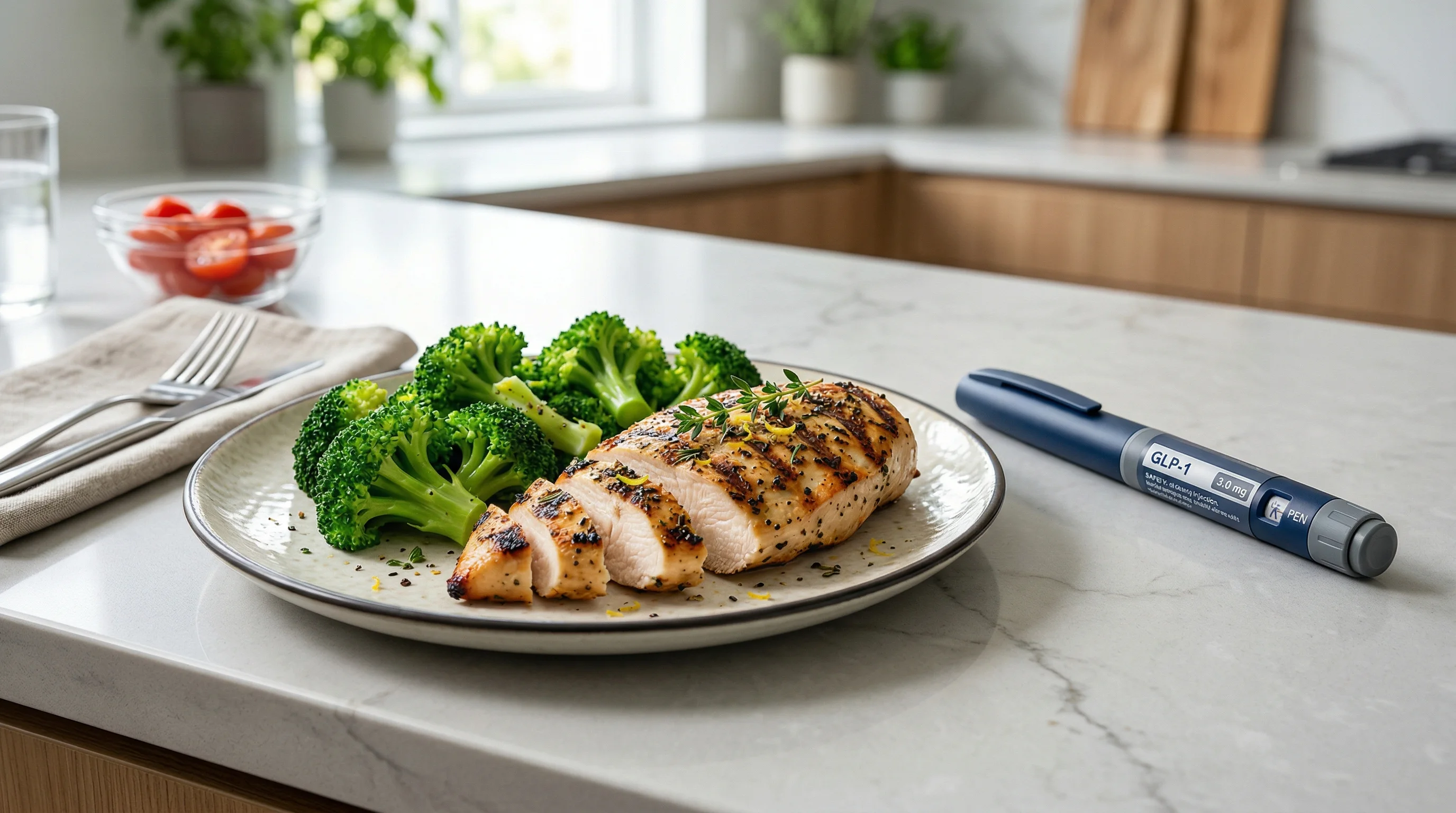
Smaller, more frequent meals work better than forcing yourself through a big one. When solid food is not happening, protein shakes are my go-to. I am hitting around 130g of protein a day right now, and a shake that covers 50-80g of that makes the rest of the day much more manageable. If a chicken breast sounds repulsive, a shake counts. Consistency beats perfection here.
Since hunger cues are not reliable anymore, tracking is how you stay honest. Our guide on What to Track on Your GLP-1 Journey covers exactly what numbers are worth watching beyond the scale.
Lift Something Heavy
Protein without resistance training is incomplete. The research is direct: combining adequate protein intake with strength training is what actually protects body composition. 3 Eating protein tells your body you have the building blocks. Lifting tells your body to use them.
Three sessions a week is enough to start. Weights, resistance bands, bodyweight movements. The format matters less than the consistency.
When Nausea Gets in the Way
Nausea is the complaint I hear most from people in their first few weeks. It makes eating anything feel like a bad idea, let alone a chicken breast.
When I started, solid meat was off the table for a while. I had to get creative with protein sources to keep my numbers up. This is common, and it passes for most people.
Soft, easy-to-digest sources help. Greek yogurt, protein shakes, eggs, cottage cheese. If something makes your nausea worse, back off it and try something else. Do not white-knuckle your way through a meal that is going to make you miserable.
For more on managing this, GLP-1 Side Effect Management: A Coach's Guide to Feeling Better has practical strategies that go beyond just "eat less."
The Mental Shift Nobody Warns You About
Somewhere around month two, food stops being a source of pleasure and starts feeling like a task. That is a real adjustment. Many clients feel guilty eating when they are not hungry, like they are cheating the medication somehow.
You are not. You are doing exactly what you should be doing.
Eating for fuel instead of comfort is not a punishment. It is the point. Your body is running a serious physiological process right now. Giving it what it needs is the job.
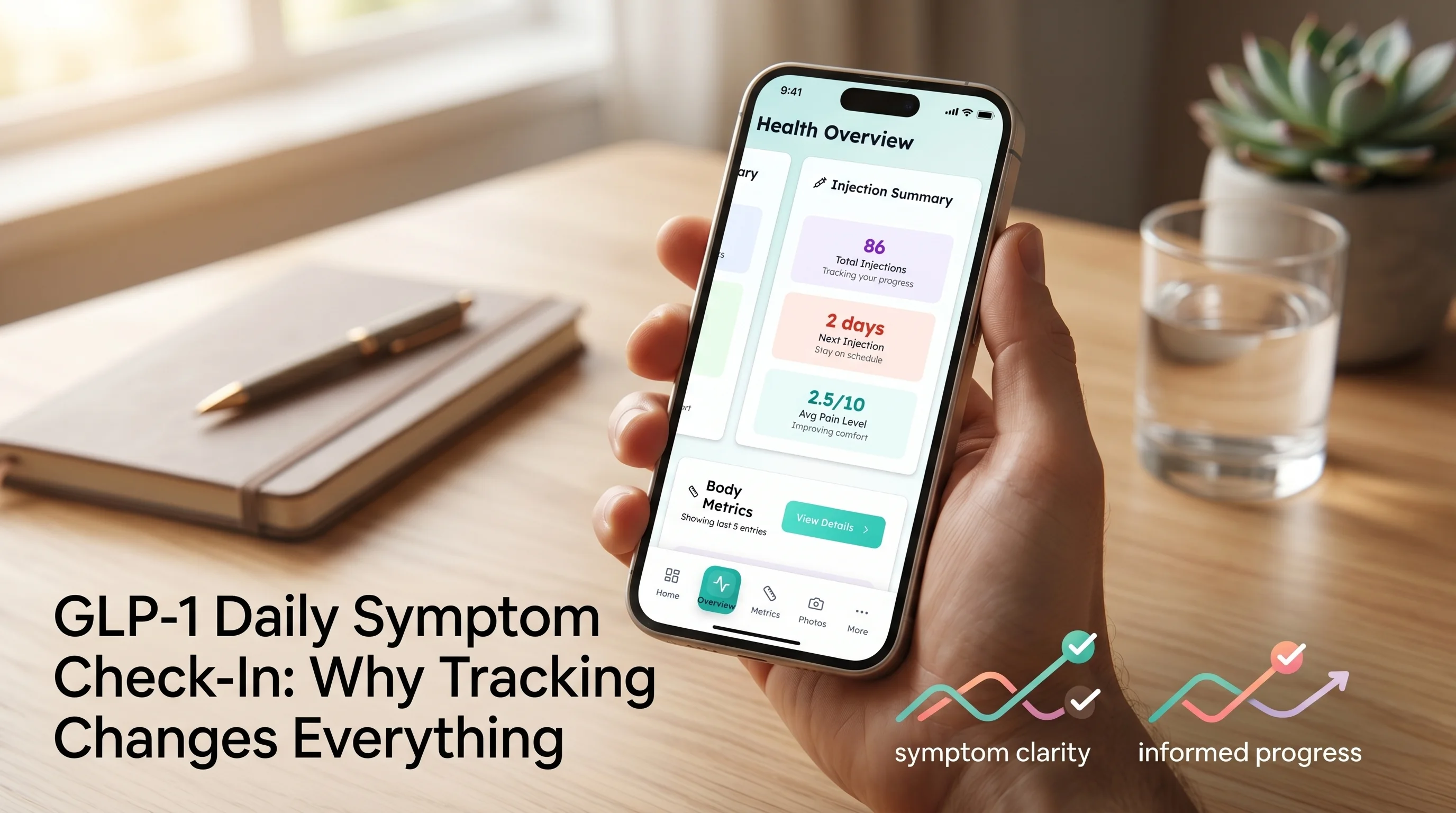
That said, the shift is real and it can be disorienting. Be straight with yourself about how you are handling it. Using a tracking tool helps here too because it removes the guesswork and keeps the focus on the numbers rather than how you feel about eating that day. See why using a GLP-1 tracking app makes that easier.
A Quick Honest Summary
You do not have to figure all of this out at once. But the basics hold:
Eat enough protein. Lift something heavy a few times a week. Stay hydrated. Track your intake because your hunger signals are no longer a reliable guide.
The medication handles the appetite. The rest is still on you.
Try GLP-1 Assist Free for 7 Days
GLP-1 Assist was built specifically for people on these medications. It tracks protein, nutrition, and the metrics that actually matter when your appetite is suppressed and your hunger cues cannot be trusted.
No generic calorie counters. No noise. Just the data you need to protect your muscle while you lose the weight.
Start your free 7-day trial at GLP-1 Assist
This article reflects the personal experience and professional observations of a Certified Personal Trainer. It is not medical advice. Always consult your healthcare provider before making changes to your nutrition or exercise routine.
Try GLP-1 Assist
About the Author Paul Brown is a Certified Personal Trainer and the creator of GLP-1 Assist. After starting his own GLP-1 journey, Paul quickly realized that standard fitness advice doesn't apply when you are battling zero appetite and medication side effects. He built GLP-1 Assist as a private, secure way for users to track their doses, manage symptoms, and prioritize nutrition without their health data being sold.
Disclaimer: Paul is a fitness professional, not a doctor. The content on this blog is based on lived experience and fitness expertise, and is not intended as medical advice. Always consult your physician regarding your medication.