A daily check-in can save you weeks of guessing.
When you're taking a GLP-1 medication, small changes matter. Nausea on Tuesday. Low energy the day after your shot. No appetite at lunch. A weird craving that came out of nowhere. None of that means much by itself.
But when you track it every day, patterns start to show up.
If you're just starting, read GLP-1 Side Effects Tracking: How to Feel Better Faster. Tracking from day one makes the whole process less confusing. I wish I had done that when I started. I spent too much time wondering why I felt wiped out on certain days when the answer was probably sitting right in front of me.
Your Body Is Adjusting
GLP-1 hormones affect appetite, digestion and blood sugar. That’s why these medications can change how hungry you feel, how full you get and how your stomach handles food. 1
That also means your body may not feel the same every day.
One week, you may feel great. The next week, your energy may drop. Some days you may forget to eat. Other days, hunger comes back and makes you think the medication stopped working.
That can mess with your head.
A daily check-in gives you a record. You stop relying on memory, which is terrible at this. You can look back and see what actually happened.
Make the Check-In Easy
Don’t turn this into homework.
Pick one time each day. Morning works well for some people. Night works better for others. The time matters less than the habit.
A good check-in can be simple:
How do I feel today?
How hungry am I?
Any nausea, reflux, constipation or fatigue?
Did anything feel different after my shot?
That’s enough to start.
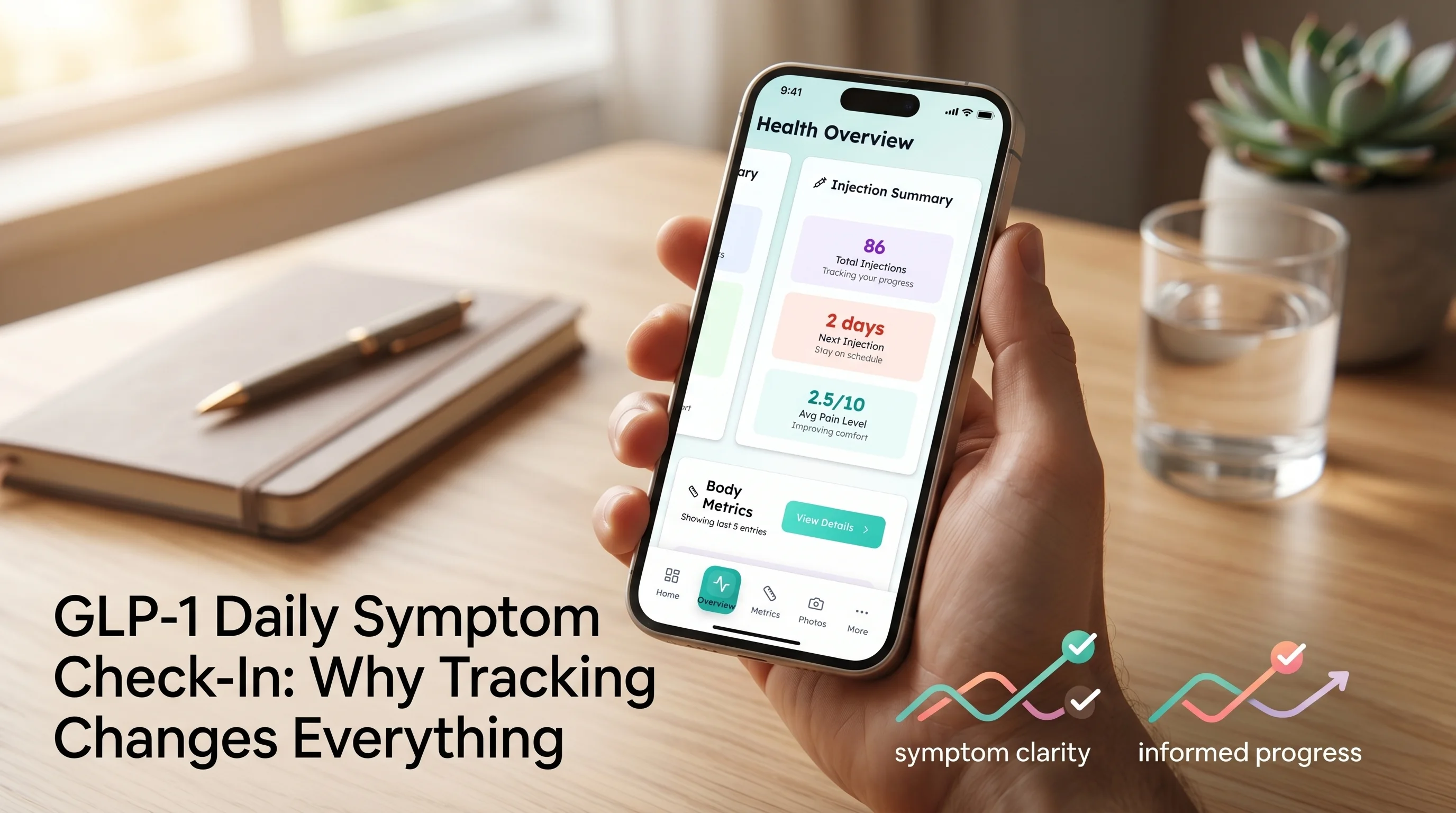
Digital tools can make this easier. Some GLP-1 tracking apps include shot day timers and quick check-ins for side effects, mood and appetite. 2 If you hate spreadsheets, read Why Use a GLP-1 Tracking App. A notebook works, but most people won’t keep using it once life gets busy.
Shot Timing Explains a Lot
Many side effects don’t show up right after the injection.
For some people, nausea hits the next day. For others, the roughest point is two days later. Fatigue can follow the same pattern. So can appetite changes.
Without tracking, it all feels random.
With tracking, you may notice something like this: every week, your appetite drops hard 24 hours after your shot. Or your reflux shows up after fatty meals on the second day. Or your energy dips every time your dose increases.
That information is useful.
It helps you plan lighter meals, easier workouts and better hydration on the days your body tends to push back. It also gives your provider clearer information if something feels wrong.
Side Effects Need a Record
People often ask if a symptom is from the medication or from something else.
That’s a fair question. Stomach bugs happen. Stress happens. Bad food choices happen too. GLP-1 side effects can look a lot like normal life being annoying.
A log helps you sort it out.
If burping, reflux or nausea shows up around the same time each week, it may be tied to your shot timing. If it happens after the same meal, food may be the trigger. If it comes out of nowhere and doesn’t follow your usual pattern, that’s different.
Don’t ignore symptoms that keep coming back. CVS MinuteClinic notes that providers can evaluate symptoms and help with care options, including GLP-1 options and nutrition guidance. 3 Your log can make that conversation less vague.
Instead of saying, “I feel sick a lot,” you can say, “I feel nauseous every week about 36 hours after my shot, and it lasts one day.”
That’s a better conversation.
For more help with common symptoms, read GLP-1 Side Effect Management: A Coach’s Guide to Feeling Better.
Mood Counts Too
The mental side gets ignored way too often.
Some people feel better fast because the food noise drops. That was me. I felt clearer than I had in years, and I still feel that way on this medication. Other people feel flat, tired or frustrated during the first few weeks.
Track it.
Mood, sleep and energy are part of the picture. Weight loss is not the only signal that something is working. If the scale stalls but your cravings are lower, your meals are steadier and your energy is improving, that matters.
Stalls are still frustrating. No need to pretend they aren’t.
But a daily check-in can show progress the scale misses. Maybe your waist is changing. Maybe your workouts feel better. Maybe you’re eating more protein without forcing it. Those wins are easy to miss when you only look at weight.
Food, Water and Protein Still Matter
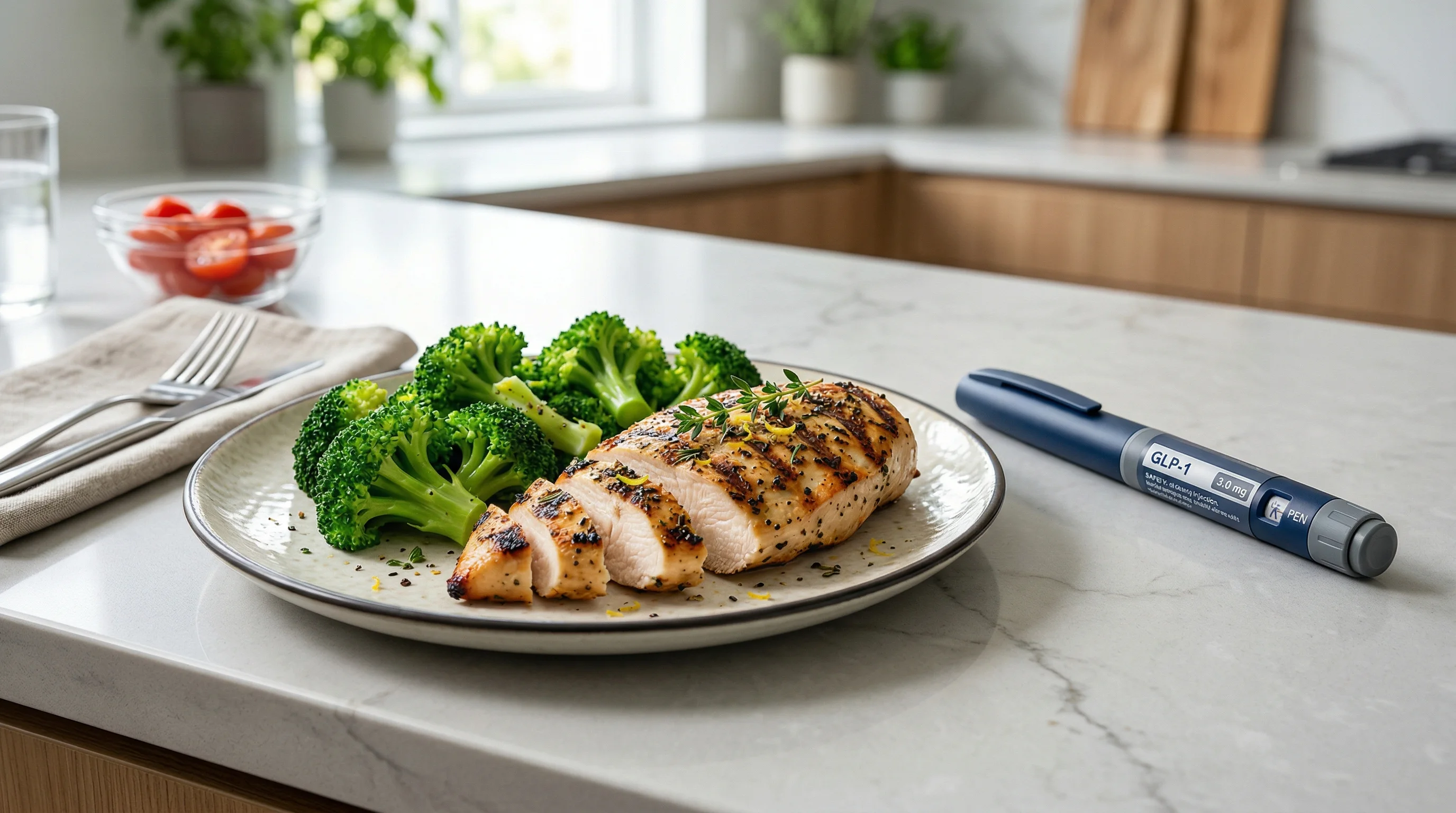
GLP-1 medications can lower appetite so much that eating enough becomes the problem.
That sounds nice until you’re tired, lightheaded and barely getting protein in. Then it becomes a real issue.
Appetite tracking helps you catch that early.
If your check-in keeps showing low hunger and low energy, look at your food. Are you eating enough protein? Are you drinking water? Are you getting fiber? Are you skipping meals because you’re “not hungry,” then feeling awful later?
Your body still needs fuel.
Some weight loss plans that involve GLP-1s include nutrition guidance, and providers may help people think through medication and food choices. 3 Your food log gives you something real to review instead of guessing.
For a bigger breakdown, read What to Track on Your GLP-1 Journey.
The Point Is Less Guessing
The check-in doesn’t need to be perfect.
It needs to be honest and consistent.
A few seconds a day can show you when side effects peak, which foods cause problems, whether your appetite is changing and how your mood is holding up. That’s the stuff people usually try to remember later. Then they forget half of it.
Your log becomes your backup brain.
And honestly, that’s better than trying to diagnose your whole week from vibes.
Start Tracking With GLP-1 Assist
GLP-1 Assist was built for the real day-to-day of GLP-1 use: doses, meals, symptoms, check-ins and progress in one private place.
Start simple. Track what matters. See your patterns sooner.
Start your free 7-day trial of GLP-1 Assist.
Related Reading
- GLP-1 Side Effects Tracking: How to Feel Better Faster
- GLP-1 Side Effect Management: A Coach’s Guide to Feeling Better
- What to Track on Your GLP-1 Journey
About the Author Paul Brown is a Certified Personal Trainer and the creator of GLP-1 Assist. After starting his own GLP-1 journey, Paul quickly realized that standard fitness advice doesn't apply when you are battling zero appetite and medication side effects. He built GLP-1 Assist as a private, secure way for users to track their doses, manage symptoms, and prioritize nutrition without their health data being sold.
Disclaimer: Paul is a fitness professional, not a doctor. The content on this blog is based on lived experience and fitness expertise, and is not intended as medical advice. Always consult your physician regarding your medication.