Side effects are the number one reason people quit GLP-1 medications before they work. Not because the medication failed, but because nobody told them what to expect or how to handle it.
You don't have to white-knuckle through nausea and digestive issues to reach your goals. Most of these symptoms are manageable. You just need the right approach.
Why Your Stomach Rebels
GLP-1 medications slow down how fast your stomach empties. That's actually how they work, sending signals to your brain that you're full so you eat less. But that sudden change in digestion is a shock to your system.
Most people on GLP-1 medications take in 25 to 50% fewer calories daily. ¹ That's a massive drop. Your body needs time to adjust, and nausea, belly pain, and diarrhea are the most common signs that it's doing exactly that. ¹ Uncomfortable, yes. But it's also the medication doing its job.
What Actually Helps With Nausea
Nausea is the first complaint I hear from almost every client. It can be rough, but small changes make a real difference.
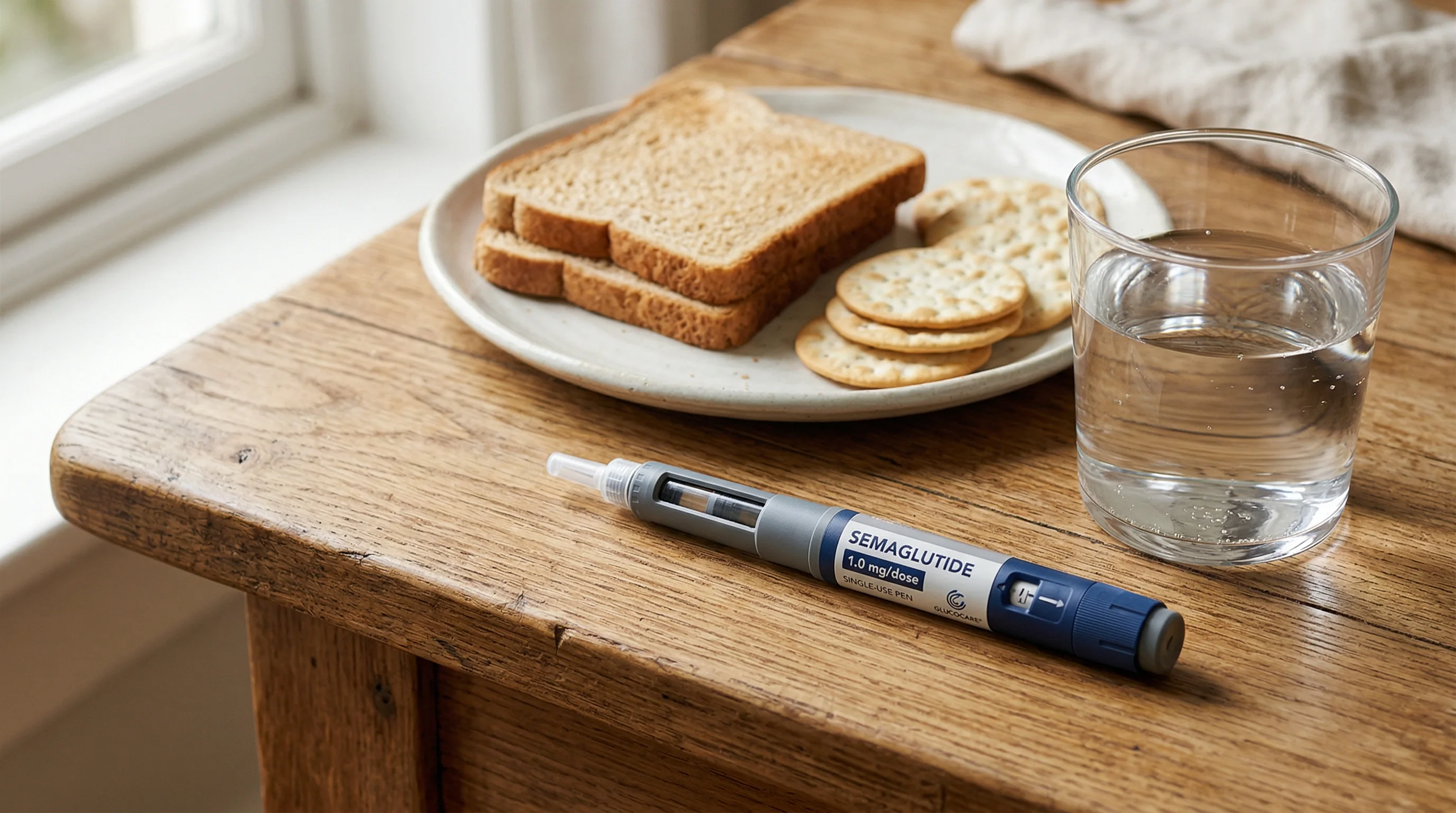
Simple fixes work surprisingly well. Avoiding strong smells, eating plain crackers, and sipping ginger tea or chewing ginger chews can take the edge off fast. ² I keep crackers on my counter and ginger chews in my gym bag for exactly this reason. Small, frequent sips of water beat gulping a full bottle at once.
Timing your injection matters too. Some of my clients feel much better taking their dose right before bed, sleeping through the worst of it. Try shifting your injection window and see if that helps.
One thing I've noticed that doesn't get talked about enough: sulfur burps. They're unpleasant and they catch people off guard. Peppermint tea and Gas-X are the two things I've seen work most consistently for that.
Tracking Your Symptoms Changes Everything
You need to know when your symptoms hit. Right after injection? Day three? After certain foods? A detailed log is the fastest way to find your personal triggers.
If you're not sure what to track or how to start, read What to Track on Your GLP-1 Journey. Writing down what you eat and how you feel reveals patterns you'd never catch otherwise. That data gives you and your doctor something real to work with.
Instead of walking into an appointment saying "I feel bad a lot," you can say "my nausea hits a 7 out of 10 on day three after my injection." That specificity changes the conversation entirely.
Dealing With Digestive Swings
Nausea isn't the only issue. A lot of people cycle between diarrhea and constipation, sometimes switching after a dose increase. It's frustrating, but hydration is your best defense. Electrolytes help keep things moving too.
Experts recommend adjusting your dosage, trying over-the-counter options, and making dietary changes to manage these symptoms. ³ Don't be afraid to ask your doctor about staying on a lower dose for a few extra weeks before escalating. Slower is often smoother.
Some people find that splitting their weekly dose into two smaller injections reduces the severity of side effects significantly. I've seen this work well. Always ask your doctor before trying it, but it's a conversation worth having.
The Emotional Weight of Side Effects
Physical discomfort is one thing. The mental toll is another, and it's real.
Canceling plans because you're afraid of symptoms is isolating. Feeling like your body is fighting you when you're trying to do something good for yourself is demoralizing. I've watched clients hit their best numbers on the scale and still feel defeated because of what the side effects were costing them socially.
Something I hear a lot, especially from clients over 50, is anxiety about "Ozempic face," the gaunt or aged look that can come with rapid weight loss. They're excited about progress and worried about what they see in the mirror at the same time. Both feelings are valid.
What's helped my clients most is shifting focus to what they're building, not just what they're losing. Resistance training and increasing protein intake can restore some facial volume over time. Progress looks like more than a number.
Eating Right When You're Barely Hungry
When the medication cuts your appetite, every bite has to count. You can't fill up on empty calories and expect to feel good.
Protein is the priority. It protects your muscle during rapid weight loss, and muscle loss is what makes people look and feel worse even as the scale drops. ⁴ Aim for a protein source at every meal, eggs, lean meat, Greek yogurt, tofu, whatever fits your routine.
Hydration is non-negotiable. ⁴ These medications can dehydrate you, and dehydration disguises itself as hunger or fatigue, two things that are already harder to read when your appetite signals are off.
Skin takes a hit during fast weight loss too. Daily sunscreen helps protect against the aesthetic effects of rapid change, and moisturizing consistently matters more than most people expect. ⁴ Treat your skincare like part of the plan, not an afterthought.
Leafy greens, eggs, lean meats, foods that pack vitamins and protein into small portions. That's what your body needs when it's adjusting to eating less volume overall.
For a simple way to keep all of this organized, read Why Use a GLP-1 Tracking App. Having one place to log symptoms, meals, and progress makes the whole process less overwhelming.
Track your progress and stay consistent with Try GLP-1 Assist, your personal GLP-1 companion.
About the Author Paul Brown is a Certified Personal Trainer and the creator of GLP-1 Assist. After starting his own GLP-1 journey, Paul quickly realized that standard fitness advice doesn't apply when you are battling zero appetite and medication side effects. He built GLP-1 Assist as a private, secure way for users to track their doses, manage symptoms, and prioritize nutrition without their health data being sold.
Disclaimer: Paul is a fitness professional, not a doctor. The content on this blog is based on lived experience and fitness expertise, and is not intended as medical advice. Always consult your physician regarding your medication.