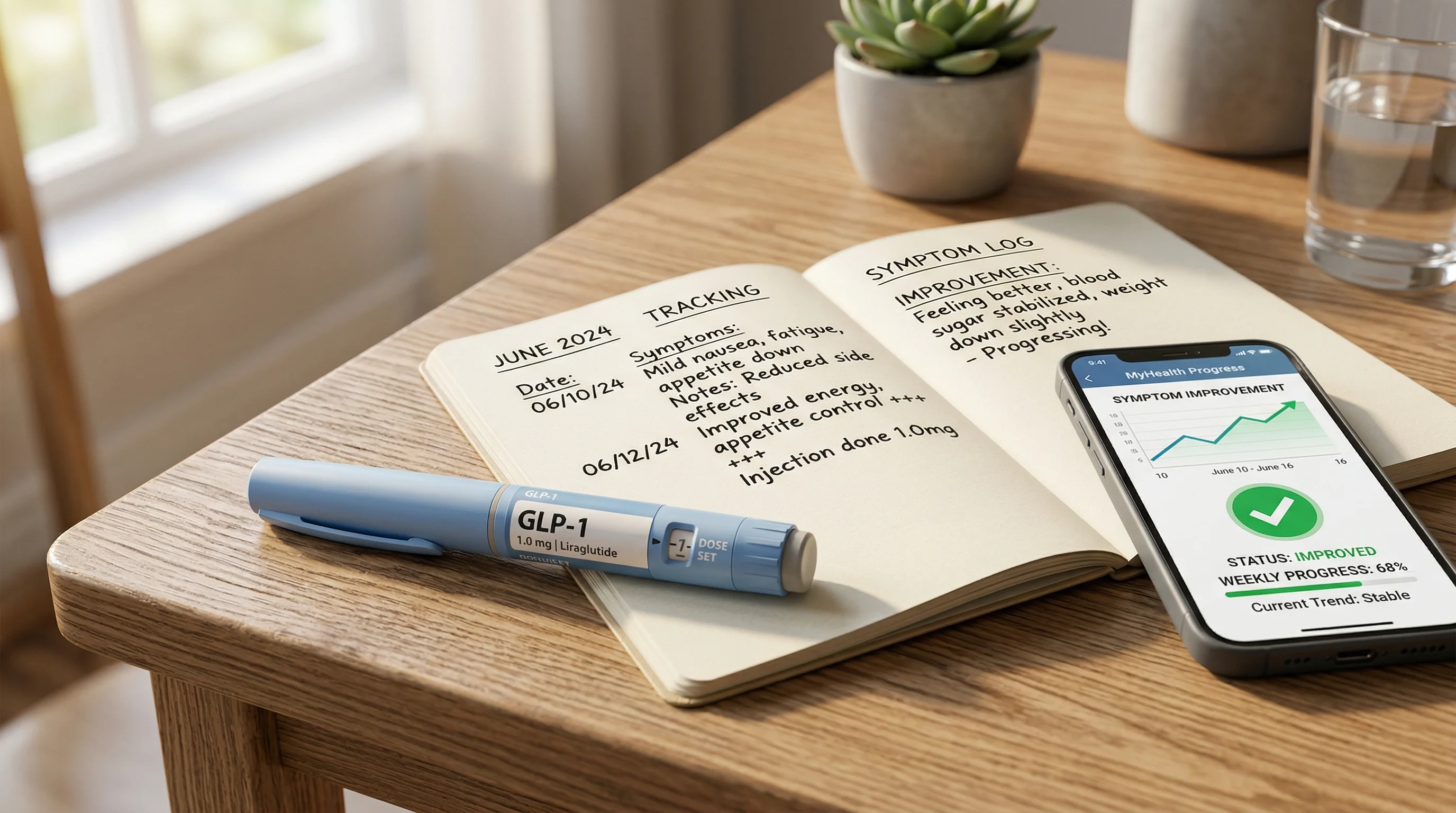
Most people who quit GLP-1 medications don't quit because the drug stopped working. They quit because they felt terrible and had no system to figure out why.
Tracking your side effects changes that. When you log what you feel and when you feel it, patterns show up fast. Small problems get fixed before they become reasons to stop.
What the Numbers Tell Us
About 12% of U.S. adults are now using GLP-1 medications. 3 That's a huge shift in how people approach weight loss, and the medical community is still catching up on how to support them through it.
Clinical monitoring is considered necessary for anyone on GLP-1 receptor agonists, specifically to manage side effects. 1 But most people aren't getting that level of oversight. They're managing on their own, which makes personal tracking even more important.
One of the biggest reasons people stop taking these medications is that they can't tell the difference between side effects and the medication actually working. 3 Nausea, fatigue, reduced appetite, those can feel bad, but they're often signs the drug is doing exactly what it's supposed to. Knowing that helps you stay the course when things get uncomfortable.
Keep Your Tracking Simple
You don't need a complicated system. You need a consistent one.
The goal is logging the intensity and timing of your symptoms so patterns show up over time. I tell every client the same thing: jot down how you feel each morning. That's it to start. One line. Do it every day.
From there, a good tracking app does the heavy lifting. If you're not sure which one to use or why it matters, read Why Use a GLP-1 Tracking App. It breaks down exactly how digital tools make this easier than any notebook ever could.
One of the most useful things I've seen clients discover through consistent tracking: their nausea peaked on day three after injection, not day one. Once they knew that, they planned their week around it. Light meals, easy workouts, no big social commitments on that day. That's the kind of insight that keeps people on the medication long enough for it to work.
The Side Effects Worth Logging
Nausea, fatigue, constipation, and stomach pain are the most common ones. Almost every client I work with deals with at least one of these, especially in the first few weeks.
But there are others that don't always make it into the clinical literature. Food aversions are real. Some clients can't stand the smell of foods they used to love. That affects what they're able to eat, which affects their nutrition, which affects how they feel overall.
Sulfur burps come up constantly in my conversations with clients. They're embarrassing and disruptive, and most people don't mention them to their doctor because they don't think it's worth bringing up. It is. Log it.
Acid reflux is another one. I've had clients confuse general GI discomfort with reflux for weeks before we connected it to a specific dose timing or something they ate. Fatty foods are a common trigger. Before I started Zepbound, I'd occasionally grab a Popeyes chicken sandwich without a second thought. After starting, I noticed heartburn hitting about five to six hours later every single time. Uncomfortable enough that it just wasn't worth it anymore. Not every food does that, but some will, and you won't know which ones until you're tracking your meals alongside your symptoms. That's exactly why we built meal tracking into GLP-1 Assist. When your food log and your symptom log live in the same place, those connections stop being a mystery.
For a deeper look at managing these specific symptoms, read our guide on GLP-1 Side Effect Management: A Coach's Guide to Feeling Better.
The Mental Side Is Just as Real
For me personally, starting GLP-1 medication was a mental shift I didn't expect. The food noise dropped almost immediately, and with it came a clarity I hadn't felt in years. I could focus better, move through my day without constant thoughts about food, and actually feel in control.
Not everyone experiences it the same way though. Some clients feel a mood dip during the adjustment period. Fatigue that lingers a little longer than expected. A general sense of "off" that's hard to name. When I see that pattern in a client's log, we dial back training intensity right away. Pushing through that on top of medication adjustment doesn't help anyone.
Tracking your mood isn't optional. It's part of the full picture. Your log should show how the medication is affecting your daily life, not just your weight.
Food and Timing Matter More Than You Think
Simple changes in hydration and food timing can address GI side effects before you ever need to reach for medication. 2 That's where most clients should start, not with supplements or prescriptions.
One pattern I've noticed with clients who've switched between tirzepatide and semaglutide: tracking both on a unified timeline makes it much easier to figure out which medication caused which symptom. Without that record, it's genuinely hard to tell. The data removes the guesswork.
If your stomach pain consistently shows up after dairy, your log will show that. If your fatigue spikes on injection day regardless of what you eat, your log will show that too. You stop guessing and start adjusting with actual information.
For a full breakdown of what metrics to log beyond just symptoms, read What to Track on Your GLP-1 Journey.
Start Your Free 7-Day Trial of GLP-1 Assist
GLP-1 Assist is built specifically for people on this medication. It's a private, secure place to log your doses, track symptoms, monitor your nutrition, and see your trends over time, without your health data being sold to anyone.
Everything covered in this article, symptom timing, mood tracking, nutrition logging, dose history, is built into the app. You don't need three different tools. You need one that was designed for exactly what you're going through.
Start your free 7-day trial today
About the Author Paul Brown is a Certified Personal Trainer and the creator of GLP-1 Assist. After starting his own GLP-1 journey, Paul quickly realized that standard fitness advice doesn't apply when you are battling zero appetite and medication side effects. He built GLP-1 Assist as a private, secure way for users to track their doses, manage symptoms, and prioritize nutrition without their health data being sold.
Disclaimer: Paul is a fitness professional, not a doctor. The content on this blog is based on lived experience and fitness expertise, and is not intended as medical advice. Always consult your physician regarding your medication.