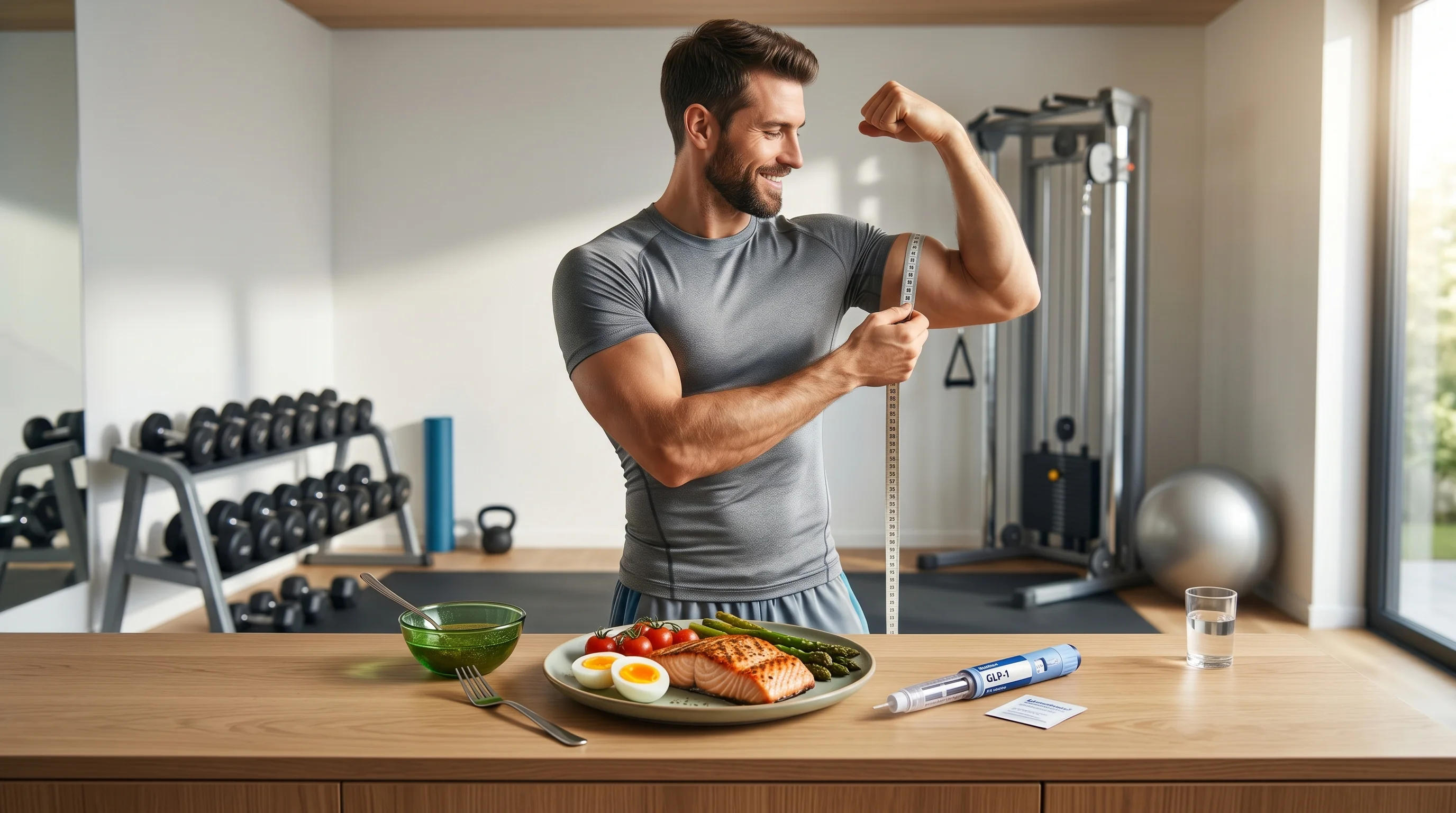
Protein is the thing people skip first when a GLP-1 crushes their appetite. That is a problem.
When you lose weight fast, you do not want your body pulling too much from muscle. Cleveland Clinic says protein can help your body lose fat instead of muscle, and fiber can help with constipation that GLP-1 medications can cause 1.
A good target for many people is about 1.2 grams of protein per kilogram of body weight each day 3. That number can sound simple until your appetite disappears. Then a normal meal can feel like a dare.
If you need help setting your personal target, read how to hit your GLP-1 protein goals.
Why Protein Comes First
Protein helps your body repair and hold on to muscle.
That matters because weight loss is not always clean. You can lose fat, but you can also lose muscle if you are eating too little, skipping protein and not training. That is the part people forget when the scale starts dropping fast.
As a trainer, this is what worries me. Fast weight loss looks great on paper, but feeling weaker in the gym is not a win. You want your clothes fitting better without losing the strength that helps you move through real life.
Know Your Number
Do not guess your protein goal.
UCHealth dietitians suggest about 1.2 grams of protein per kilogram of body weight per day for people using GLP-1 medications 3. For some people, that may be higher or lower depending on body size, training, medical history and what their clinician recommends.
Once you have your number, split it across the day.
JAMA Internal Medicine patient guidance suggests starting each meal with 20 to 30 grams of protein 4. That is a lot easier than trying to hit your full goal at dinner when you are already full.
Eat It Before You Get Full
The best rule is protein first.
Eat the eggs before the toast. Eat the chicken before the rice. Eat the Greek yogurt before the fruit. This is not fancy. It just works.
GLP-1 medications can make you feel full fast. If you start with low-protein foods, you may run out of appetite before you get to the food your body needs most.
Cleveland Clinic says lean protein sources like fish, chicken, tofu and beans are good choices while taking a GLP-1 1. Ohio State also recommends lean protein, fruits, vegetables and whole grains 2.
Small Meals Count
A full plate can feel impossible on a GLP-1.
So stop thinking every meal has to look like dinner. Think smaller. A protein shake. Cottage cheese. Greek yogurt. Eggs. Tuna. Chicken. Beans. Tofu. A small smoothie with protein added.
JAMA Internal Medicine notes that protein shakes can help when GLP-1 medications severely reduce appetite 4.
That does not mean you need a special product plan. You just need something you can tolerate and repeat.
Foods That Can Make Eating Harder
Some foods can make side effects worse.
Ohio State recommends limiting foods that are high in sugar, deep-fried, spicy, acidic or high in saturated fat to help reduce side effects like nausea, vomiting, heartburn, bloating and diarrhea 2.
This is where people get themselves in trouble. They finally feel hungry, eat something greasy or heavy, then feel awful for hours.
You do not have to eat perfectly. But during the first few weeks, your stomach may be less forgiving than usual.
Water and Fiber Still Matter
Protein gets most of the attention, but water and fiber matter too.
Ohio State recommends trying to drink at least 64 ounces of water each day while taking a GLP-1 2. Cleveland Clinic also points to fiber as helpful for constipation 1.
Do not slam fiber all at once. That can backfire. Add it slowly and drink water with it.
If your stomach is touchy, softer foods can help. Greek yogurt, cottage cheese, scrambled eggs, soups and smoothies can be easier than a big plate of dry chicken and vegetables.
Protein Alone Is Not Enough
Eating protein helps, but you still need to use your muscles.
A joint advisory on GLP-1 nutrition says preserving muscle and bone mass should include resistance training and the right diet 5. Ohio State also says strength training or weightlifting can help prevent muscle loss 2.
That is why lifting matters.
You do not need to train like a bodybuilder. You need to give your body a reason to keep muscle around. Start with basic strength work and build slowly.
For a safe starting point, read strength training basics for GLP-1 users.
Track More Than the Scale
The scale will move, but it should not be the only thing you watch.
Track protein. Track workouts. Track strength. Track energy. Track how your clothes fit. Track side effects and what foods make them better or worse.
If the scale slows down but you are getting stronger and your waist is shrinking, that can still be progress.
Many people feel calmer when they track protein because it gives them something useful to focus on. The medication may quiet your appetite, but your body still needs care.
To keep a better view of what is changing, read what to track while using GLP-1 medication.
Start Tracking With GLP-1 Assist
GLP-1 Assist helps you track your dose routine, protein, meals, hydration, workouts, side effects and progress in one place.
That makes it easier to see what you are actually doing each week, instead of guessing and hoping you are eating enough.
Start your free 7-day trial today: Try GLP-1 Assist free for 7 days.
Related Reading
- GLP-1 Protein & Nutrition Strategies: Save Your Muscle While You Lose
- Hitting Your GLP-1 Protein Goals to Stop Muscle Loss
- Strength Training Basics for GLP-1 Users: Keep the Muscle
About the Author Paul Brown is a Certified Personal Trainer and the creator of GLP-1 Assist. After starting his own GLP-1 journey, Paul quickly realized that standard fitness advice doesn't apply when you are battling zero appetite and medication side effects. He built GLP-1 Assist as a private, secure way for users to track their doses, manage symptoms, and prioritize nutrition without their health data being sold.
Disclaimer: Paul is a fitness professional, not a doctor. The content on this blog is based on lived experience and fitness expertise, and is not intended as medical advice. Always consult your physician regarding your medication.