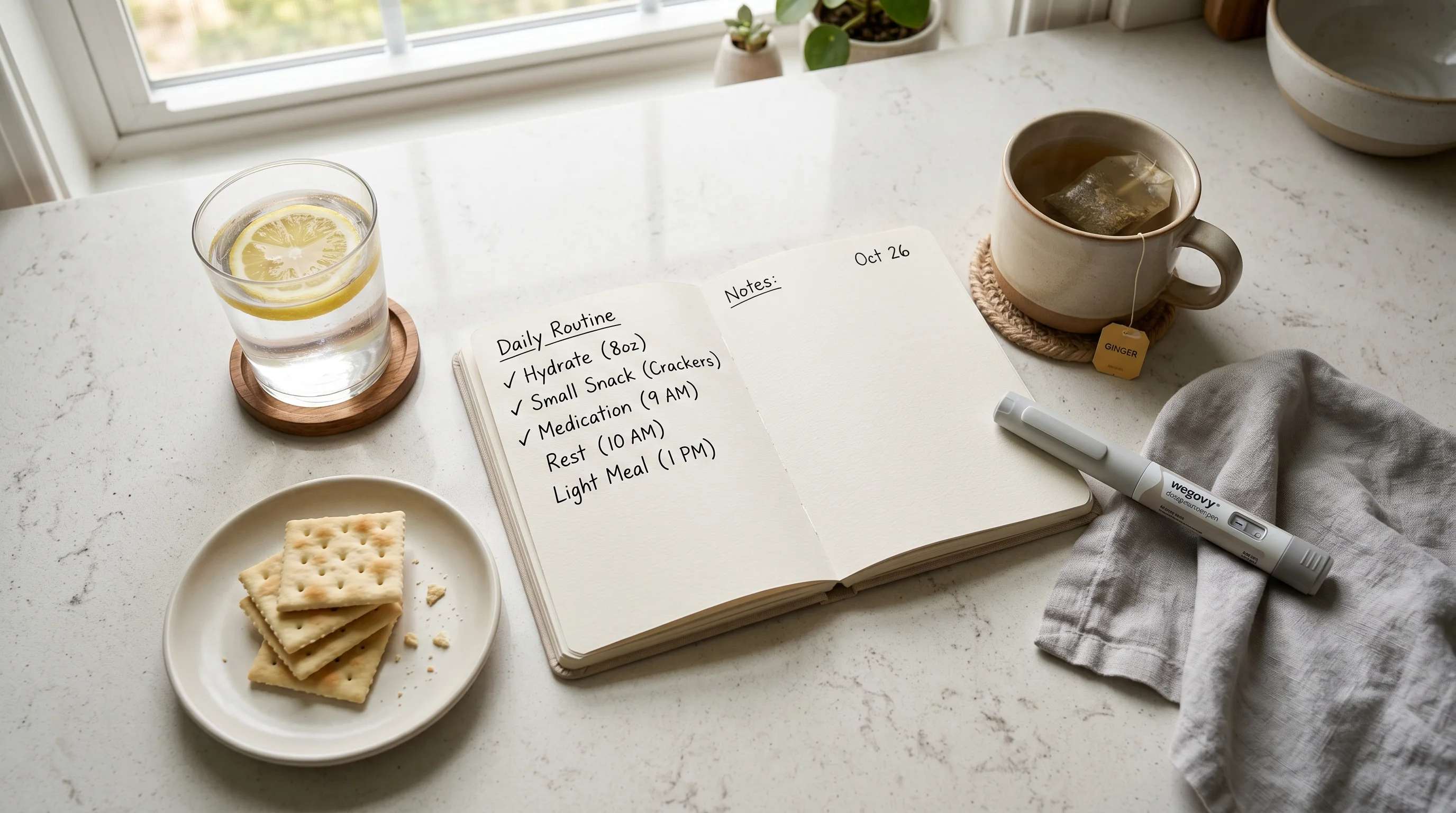
A GLP-1 nausea day plan is most useful on the ordinary rough days: when food feels like a chore, your stomach feels touchy, and you need a simple way through.
You wake up queasy. Coffee sounds awful. Food feels like a chore. Then you wait too long to eat, get shaky, drink too much water at once and somehow feel worse.
That cycle is common on GLP-1 medications. These medications slow digestion, which can help with appetite but can also make food sit in your stomach longer. That is one reason nausea, constipation and reflux can show up, especially when you are new to the medication or moving up in dose. 13
This plan is for the rough days. Not emergency days. Not “I cannot keep fluids down” days. If nausea or vomiting is severe, if it lasts for several days or if you cannot drink fluids or eat food, contact your doctor. 2
For normal queasy days, structure helps.
Before You Get Out of Bed
Do not start the day by popping up and hoping for the best.
Give your stomach a minute. Sit up slowly. Take a few small sips of water. If mornings are your worst time, keep something plain next to the bed, like crackers or dry toast.
You are not trying to eat breakfast yet. You are just giving your stomach a soft landing.
A lot of people try to “push through” morning nausea, then they end up skipping food until noon. That usually makes the day harder. A tiny bland bite early can be enough to stop the spiral.
First Hour: Small Sips, Not Big Gulps
Hydration matters, but the way you drink matters too.
If you chug water when your stomach already feels full, you may feel worse. Sip slowly instead. Water is fine. Ginger tea can work. Peppermint tea helps some people, though it can bother reflux for others.
Mayo Clinic’s side effect guidance suggests drinking water or ginger herbal tea throughout the day between meals, not all at once. 2
If plain water sounds bad, try:
- ice chips
- diluted electrolyte drink
- ginger tea
- cold water in tiny sips
- warm water if cold drinks feel harsh
Skip alcohol on nausea days. Cleveland Clinic recommends avoiding excess alcohol while taking GLP-1s because it can irritate your stomach and worsen side effects. 4
Breakfast: Keep It Boring
This is not the time for a giant omelet, a greasy breakfast sandwich or a heroic protein goal.
Pick something small and plain. Mayo Clinic suggests cool and bland foods like crackers, toast or pretzels when nausea hits. 2
Good options:
- toast
- crackers
- banana
- applesauce
- a few bites of oatmeal
- Greek yogurt if dairy sits well
- a small protein shake if liquids are easier
If you can only eat a few bites, fine. The goal is not a perfect breakfast. The goal is to avoid an empty stomach and keep the day moving.
Mid-Morning: Check the Pattern
Around mid-morning, ask one simple question:
What made it worse?
Do not overthink it. Just notice.
Maybe coffee hit too hard. Maybe dairy made things worse. Maybe you ate too fast. Maybe your shot day always needs a different plan.
If you have not been tracking symptoms yet, start with our guide on GLP-1 side effect tracking. You do not need a complicated log. You need enough notes to see patterns.
Track:
- time of nausea
- what you ate
- how fast you ate
- fluids
- dose day
- constipation
- sleep
- stress
That last one matters. Stress can turn a slightly upset stomach into a full-day problem.
Lunch: Half the Meal You Think You Need
GLP-1 appetite can be weird. You may feel starving for five minutes, then full after six bites.
So do not build lunch like a normal lunch.
Build a smaller plate first. Eat slowly. Stop before you feel stuffed. Cleveland Clinic notes that GLP-1s reduce appetite but your body still needs nutrients, so the goal is smaller, nutrient-dense meals that are easier to tolerate. 1
A good nausea-day lunch might be:
- chicken soup
- rice with a little chicken
- toast with turkey
- eggs and toast
- a small smoothie
- broth plus a few crackers
- a small bowl of oatmeal
Avoid high-fat meals if you are already queasy. Cleveland Clinic says high-fat foods and spicy foods can make GLP-1 side effects worse. 1
This is where a lot of people accidentally punish themselves. They feel better for twenty minutes, eat a big meal and then feel awful for three hours.
Do less.
Early Afternoon: Walk Before You Panic
If nausea comes back after lunch, try a slow walk.
Not a workout. Not a calorie burn. Just movement.
Mayo Clinic suggests getting fresh air as one way to help with nausea from weight-loss medications. 2
A few minutes outside can help you reset. If walking feels like too much, sit upright. Do not lie down right after eating. Mayo Clinic specifically recommends not lying down after a meal when nausea or reflux is an issue. 2
If you are also dealing with constipation, nausea may feel worse. A daily symptom check can help you see whether your nausea is tied to bathroom patterns. Use this daily GLP-1 symptom check-in if you want a simple structure.
Late Afternoon: Use the “Safe Snack” List
Late afternoon is where people get into trouble.
You are tired. You barely ate. You want something easy. Then the easiest thing is chips, candy or whatever takes no effort.
That can backfire.
Cleveland Clinic recommends lean protein, fruits, vegetables and whole grains while limiting added sugar, refined carbs, processed snacks, high-fat foods and spicy foods. 1
Keep a short safe-snack list ready:
- Greek yogurt
- cottage cheese
- crackers
- banana
- apple slices
- protein shake
- turkey slices
- toast
- broth
- rice
- a small smoothie
You do not need variety every day. You need a few foods that do not start a fight with your stomach.
Dinner: Eat Earlier and Smaller
Dinner is not the place to catch up on everything you missed.
If nausea has been hanging around all day, make dinner simple. Smaller portions. Lower fat. Nothing spicy. Eat slowly.
Mayo Clinic recommends smaller, more frequent meals, eating more slowly and avoiding rich, high-fat meals when nausea shows up. 2
Try:
- soup with chicken
- baked fish and rice
- eggs and toast
- turkey and a small potato
- tofu with rice
- oatmeal if that is all you can handle
Yes, oatmeal for dinner counts on a bad nausea day.
You are allowed to be practical.
Evening: Set Up Tomorrow
Before bed, take two minutes to write down what worked.
Not a long journal entry. Just the facts.
Example:
“Worst nausea at 10 AM. Coffee made it worse. Crackers helped. Soup was fine. Big water bottle was too much.”
That is useful. After a week, you may see a pattern you would have missed otherwise.
If side effects keep changing week by week, read Common GLP-1 Side Effects by Week. It can help you separate normal adjustment from something worth asking your clinician about.
When to Call Your Doctor
Most nausea is manageable. Some nausea is not.
Call your doctor if:
- vomiting is severe
- symptoms last several days
- you cannot drink fluids
- you cannot eat food
- you feel dizzy or faint
- you have severe stomach pain
- you see signs of an allergic reaction
Mayo Clinic’s guidance is clear: severe nausea, severe vomiting, inability to drink fluids or serious symptoms need medical attention. 2
Do not turn this into a toughness test.
The Simple Version
On a nausea day, your job is simple.
Eat smaller. Sip slowly. Avoid greasy and spicy foods. Stay upright after meals. Track what happened. Call your doctor if symptoms are severe.
If you want more general nausea strategies, start with GLP-1 Nausea Support. If you want the broader side effect picture, read GLP-1 Side Effect Management.
Start Tracking With GLP-1 Assist
Nausea gets easier to manage when you can see the pattern.
GLP-1 Assist helps you track dose timing, symptoms, food, hydration and the small details that explain why one day felt fine and the next one did not.
Related Reading
- GLP-1 Nausea Support
- The Ultimate GLP-1 Daily Routine: Habits That Actually Work
- GLP-1 Nausea Relief: Practical Tips to Feel Better Fast
About the Author Paul Brown is a Certified Personal Trainer and the creator of GLP-1 Assist. After starting his own GLP-1 journey, Paul quickly realized that standard fitness advice doesn't apply when you are battling zero appetite and medication side effects. He built GLP-1 Assist as a private, secure way for users to track their doses, manage symptoms, and prioritize nutrition without their health data being sold.
Disclaimer: Paul is a fitness professional, not a doctor. The content on this blog is based on lived experience and fitness expertise, and is not intended as medical advice. Always consult your physician regarding your medication.