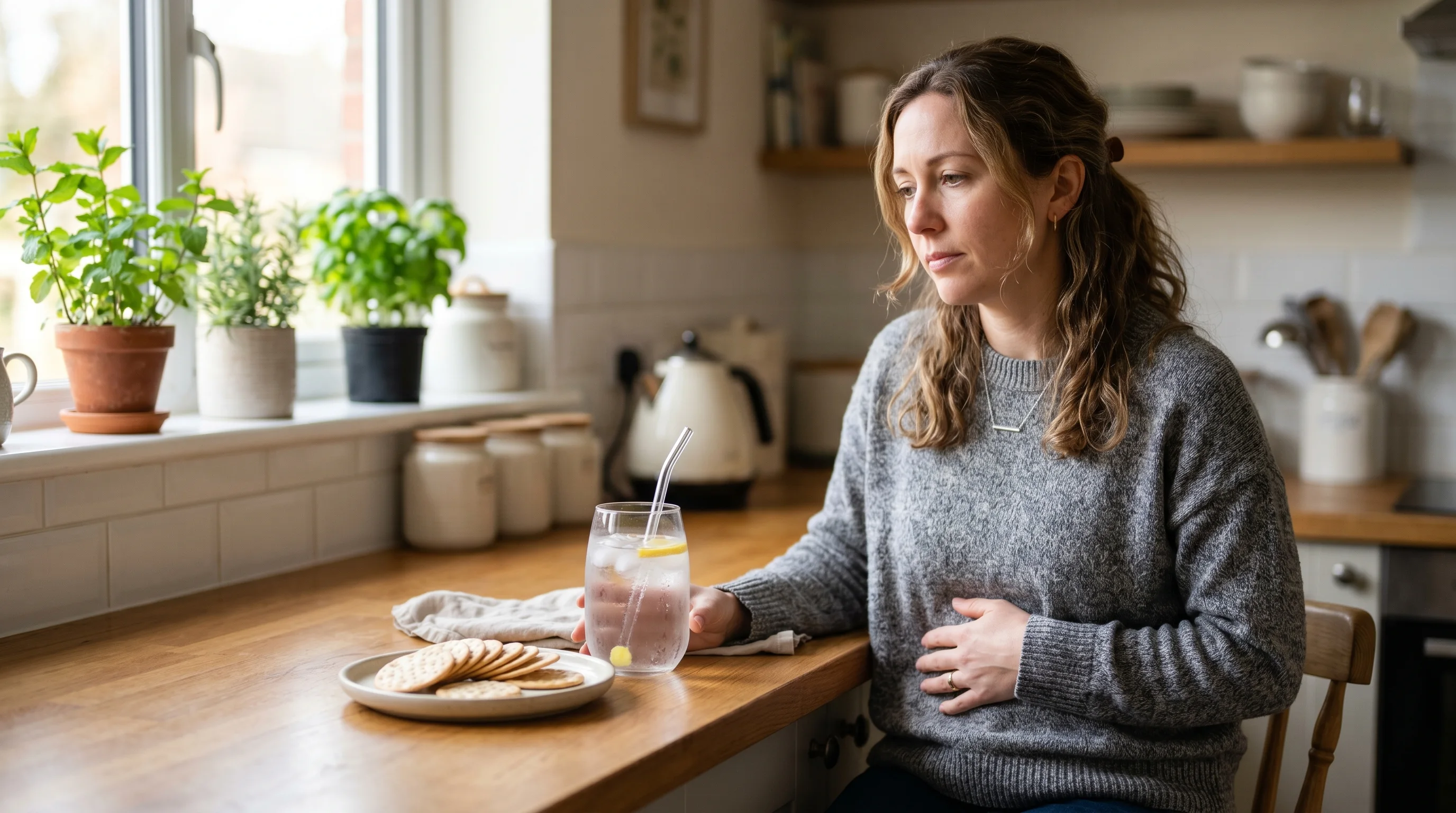
GLP-1 nausea foods need to be easy, small and boring in the best way. When food sounds awful, the goal is to get something down, keep fluids moving and avoid the foods most likely to make nausea worse.
This applies whether your plan includes semaglutide, like Wegovy or Ozempic, or tirzepatide, like Zepbound or Mounjaro. The food pattern is similar: smaller meals, enough protein, steady fluids and fewer foods that tend to make GI symptoms worse. 235
GLP-1 medications can slow digestion and may cause GI side effects like nausea and constipation. Zepbound can also delay gastric emptying and commonly causes GI side effects such as nausea, vomiting, diarrhea, constipation, abdominal pain, indigestion and reflux. 15
If you need an hour-by-hour plan for a rough day, start with A GLP-1 Nausea Day Plan That Actually Helps. This article is narrower. It is the food list for the days when opening the fridge feels like a threat.
Start Smaller Than You Think
A nausea meal does not need to look like breakfast, lunch or dinner.
Start with a few bites. Then wait. If your stomach stays calm, take a few more bites. Mayo Clinic Diet recommends smaller, more frequent meals, slower eating and avoiding skipped meals when nausea or low appetite shows up on weight-loss medications. 2
That could mean:
- half a banana
- a few crackers
- a spoonful of Greek yogurt
- a few bites of rice
- a small cup of soup
- a protein shake over ice, sipped slowly
Tiny counts. The win is not volume. The win is breaking the empty-stomach cycle before it turns into shaky, sour nausea.
Easy GLP-1 Nausea Foods To Start With
Cool, bland foods often go down better because they smell less and do not ask much from your stomach. Mayo Clinic Diet suggests cool and bland foods like crackers, toast and pretzels for nausea. Mayo Clinic also recommends easing back into bland foods such as crackers, toast, cereal, rice, fruit and high-protein foods when nausea or vomiting is present. 24
Good first foods include:
- toast
- crackers
- pretzels
- rice
- oatmeal
- applesauce
- bananas
- broth
- chicken soup
- plain pasta
- cold yogurt
- cottage cheese
- scrambled eggs
You do not need to love these foods forever. This is a short list for hard moments.
Rescue food and everyday food serve different jobs. Mayo Clinic Diet names crackers and toast as nausea options. Ohio State says GLP-1 users may need to limit high-sugar foods, greasy foods, spicy foods, acidic foods and foods high in saturated fat. So use crackers as a bridge on rough days, then return to higher-protein, higher-fiber meals when your stomach settles. 23
If crackers are the only food that works today, use crackers. If yogurt is easier cold than room temperature, keep it cold. If soup smells too strong, switch to broth or toast.
Add Protein Without Making It A Project
Protein still matters while you are eating less. Cleveland Clinic notes that protein helps protect muscle while your body loses weight. Ohio State also recommends lean protein while taking a GLP-1 medication and notes that protein can help prevent muscle loss. 13
The hard part is that a big chicken breast can sound impossible when you are queasy.
Try smaller protein options instead:
- Greek yogurt
- cottage cheese
- eggs
- chicken soup
- tuna on crackers
- tofu
- a small protein shake
- a few bites of turkey
- string cheese, if dairy sits well
Do not force a giant protein meal when your stomach is already upset. Start with the smallest protein you can tolerate and build from there.
For a deeper reset on protein, use GLP-1 Protein Goals: Stop Muscle Loss Before It Starts. That article is better for normal days. This one is for queasy days.
Drink Between Meals
Water can feel weird on GLP-1s. Some people feel worse when they drink a lot with food because the stomach already feels too full.
Mayo Clinic Diet recommends drinking water or ginger herbal tea through the day between meals when nausea is present. Mayo Clinic also recommends small sips of clear drinks and oral rehydration solutions to help prevent dehydration. 24
Try this pattern:
- a few sips when you wake up
- a few sips between breakfast and lunch
- a few sips midafternoon
- a few sips after dinner
You can also try broth, ice chips, cold water or an oral rehydration solution if those sit well.
Do not chug. Chugging is a fast way to make a slow stomach angry.
Foods To Pause When Nausea Is Loud
Some foods may be fine later but rough during a nausea spell.
Cleveland Clinic says certain foods can make GLP-1 side effects worse, including added sugar, refined carbs, processed foods, high-fat foods and spicy foods. Ohio State gives similar guidance for GLP-1 users, including limiting high-sugar, deep-fried, greasy, spicy, acidic and high-saturated-fat foods. 13
On a high-nausea day, consider pausing:
- fried food
- greasy takeout
- pizza
- heavy cream sauces
- spicy salsa or hot sauce
- candy and desserts
- soda or juice
- very large meals
- alcohol
- carbonated drinks, if they make bloating worse
Mayo Clinic also notes that food smells and cooking smells can trigger nausea. If warm food smells too strong, try cold yogurt, applesauce, toast or another low-smell option. 4
Treat this as a short-term truce with your stomach.
If you track symptoms, write down which foods made the day worse. The GLP-1 Daily Symptom Check-In can help you spot patterns without turning it into a second job.
Build A Low-Effort Nausea Shelf
The worst time to shop for nausea food is when you are already nauseated.
Keep a small shelf or bin ready with foods that usually work for you. Think of it like a backup plan, not a diet plan.
Try keeping these around:
- crackers
- pretzels
- microwave rice cups
- applesauce cups
- bananas
- instant oatmeal
- broth cartons
- plain soup
- oral rehydration solution
- ginger herbal tea
- protein shakes
- Greek yogurt
- cottage cheese
- eggs
You can add more interesting food when your stomach calms down. On rough days, boring is useful.
Use Routine To Prevent The Crash
Nausea often gets worse when the day gets chaotic.
You skip breakfast because nothing sounds good. Then you drink coffee on an empty stomach. Then lunch feels impossible. By dinner, you are hungry, queasy and annoyed with every food in the house.
A simple routine helps. Eat earlier than your nausea peak. Keep meals small. Drink between meals. Stop before full. Give dinner a softer landing.
If your whole day needs structure, use The GLP-1 Daily Routine That Makes Life Easier. Pair that routine with this food list and you have a much better chance of catching nausea before it runs the day.
When To Call Your Clinician
Some nausea is common. Severe nausea is different.
Mayo Clinic Diet says to contact your doctor right away if symptoms are severe, last for several days or you cannot drink fluids or eat food. It also advises reaching out for severe nausea or vomiting. Zepbound prescribing information also says to tell your healthcare provider if stomach problems are severe or will not go away. 25
Call your clinician if you have:
- vomiting that will not stop
- signs of dehydration
- severe stomach pain
- dizziness or faintness
- symptoms that last several days
- nausea that gets worse after a dose increase
- trouble keeping fluids down
Do not try to prove you are tough. The medication plan can often be adjusted, but your clinician needs to know what is happening.
Try GLP-1 Assist For Food And Symptom Support
GLP-1 Assist helps you track symptoms, meals, protein and routines in one place, so you can see what actually helps instead of guessing every week.
Start your free 7-day GLP-1 Assist trial and make the next rough day easier to plan for.
Related Reading
- GLP-1 Nausea Support
- GLP-1 Nausea Relief: Practical Tips to Feel Better Fast
- Common GLP-1 Side Effects by Week: What to Expect
About the Author Paul Brown is a Certified Personal Trainer and the creator of GLP-1 Assist. After starting his own GLP-1 journey, Paul quickly realized that standard fitness advice doesn't apply when you are battling zero appetite and medication side effects. He built GLP-1 Assist as a private, secure way for users to track their doses, manage symptoms, and prioritize nutrition without their health data being sold.
Disclaimer: Paul is a fitness professional, not a doctor. The content on this blog is based on lived experience and fitness expertise, and is not intended as medical advice. Always consult your physician regarding your medication.